2026 Brand Catalog Review

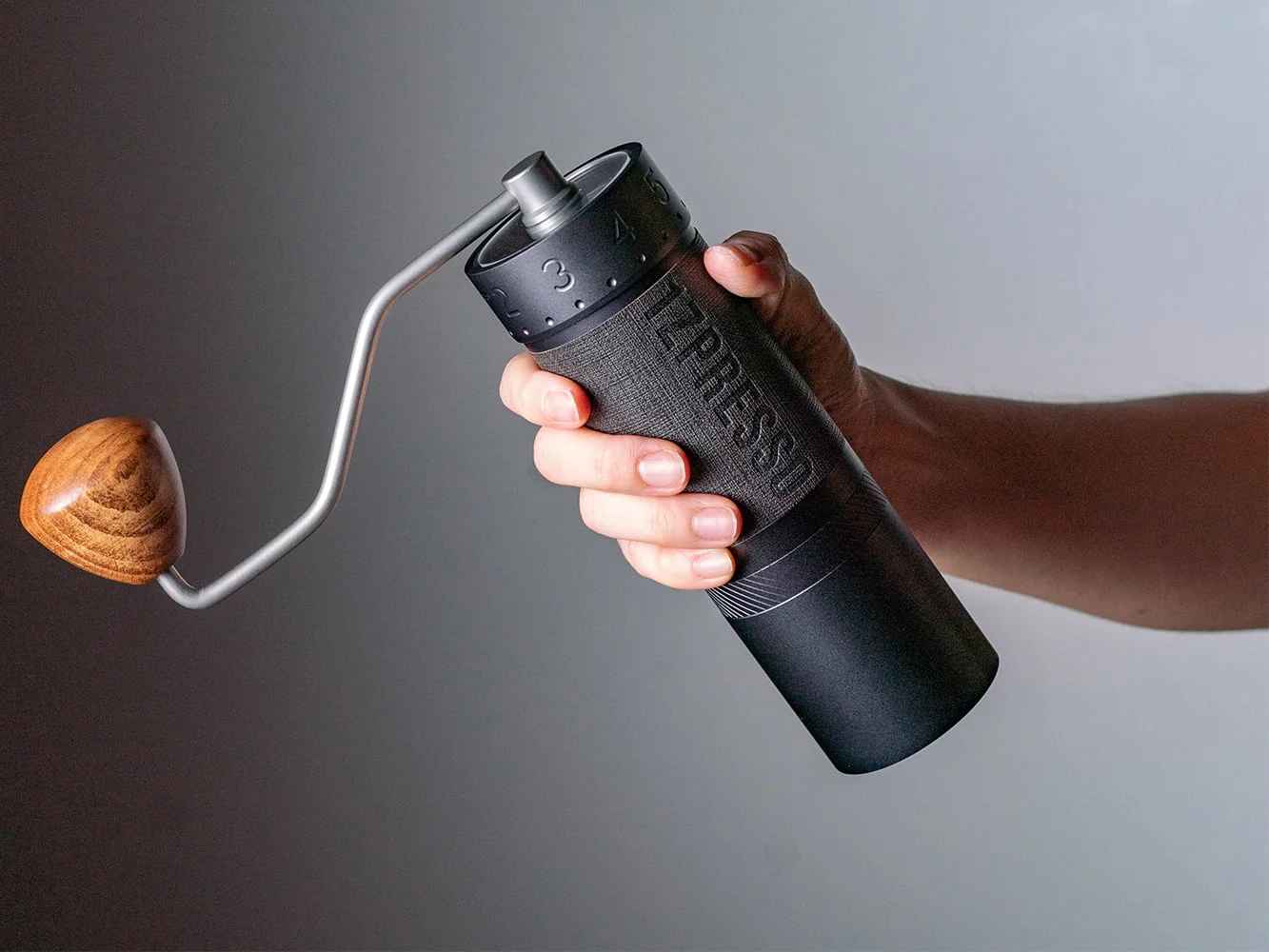
The Complete
1Zpresso Guide

Taiwan's precision engineering meets coffee obsession. We tested the full 1Zpresso lineup to match each grinder to its ideal use case.

At A Glance: Top Picks

Best Overall

1Zpresso JX-Pro

The biggest-selling grinder in the lineup. Works for everything from espresso to cold brew.

Best for Espresso

1Zpresso J-Max

Surgical 8.8-micron adjustments make this the espresso specialist.

Best for Filter

1Zpresso ZP6 Special

Filter-optimized burrs push extractions to 23.5% without astringency.

Coffeeble is reader-supported. We may earn a commission through products purchased using links on this page. Editorial guidelines

1Zpresso's naming convention reads like a chemistry exam. J-Max? K-Ultra? ZP6 Special? The alphabet soup hides a straightforward system: J for espresso. Z for filter. K for everything. Q for travel. Once you decode it, picking the right grinder takes five seconds.

1Zpresso comes from Taiwan's precision manufacturing sector, the same industry that machines iPhone chassis and aerospace components. They calibrate every burr set before it ships. Tolerances sit around 10 microns. This produces consistency that embarrasses electric grinders costing three times more.

They iterate fast. User feedback from one generation shapes the next within months. The JX became the JX-Pro after users wanted external adjustment. The K-Plus evolved into the K-Ultra when people asked for faster grinding. Each update solves real problems instead of adding features for marketing.

Why 1Zpresso Dominates Hand Grinding

We've used 1Zpresso grinders daily since 2022. The JX-Pro replaced a Comandante C40. The J-Max handles our espresso workflow. The ZP6 Special sits next to the V60. Four years. Thousands of doses. This isn't speculation from spec sheets.

Testing Protocol

How We Test Hand Grinders

Each 1Zpresso grinder spent three weeks in our rotation. We measured shaft alignment, verified adjustment claims, and tracked flavor profiles across 150+ doses per unit.

01

Burr Alignment

Measured radial runout and shaft wobble under load. The tri-axial bearing system eliminates the dynamic gap that creates boulders and fines.

02

Adjustment Resolution

Verified micron-per-click claims against actual particle output. The J-Max's 8.8µm steps produce 2-3 second shot time changes per click.

03

Grind Speed & Torque

Timed 20g doses of light roast. Measured the force required at fine espresso settings where burr geometry matters most.

04

Particle Distribution

Compared each burr profile across brew methods. The ZP6's long-path geometry produces a tighter unimodal curve than traditional conicals.

The 1Zpresso Hierarchy

After months of hands-on testing and thousands of cycles, these are the only units that earned a spot in our final rankings. Here is the definitive technical breakdown.

Product Award Technical Edge Verdict MSRP
JX-Pro
1Zpresso
Best Overall 12.5µm / 40 clicks per rotation
verified 9.6
$189 Buy Now
J-Max
1Zpresso
Best for Espresso 8.8µm / 90 clicks per rotation
verified 9.5
$199 Buy Now
K-Ultra
1Zpresso
Best Manual 20µm / Magnetic Catch Cup
verified 9.5
$259 Buy Now
X-Pro
1Zpresso
Budget Pick 12.5µm / Budget K-Series
verified 8.8
$149 Buy Now
Q2
1Zpresso
Best Travel 25µm / AeroPress Compatible
verified 8.5
$89 Buy Now
ZP6 Special
1Zpresso
Best for Filter 22µm / Filter-Optimized Burrs
verified 8.9
$189 Buy Now

The Espresso Specialists: J Series

The J series exists for one purpose: surgical espresso dialing. Fine adjustment steps (8.8-12.5 microns) and external dials make these grinders the most precise manual options for pulling shots. The burrs are designed to generate enough fines for puck cohesion without muddying the cup.

Best Overall

1Zpresso JX-Pro

  • 48mm Heptagonal Burrs
  • 12.5µm/click Steps
  • 40 Clicks/Rotation
  • Foldable Handle
Approx $189

The JX-Pro is 1Zpresso's biggest-selling grinder for good reason. With 48mm heptagonal burrs and 12.5-micron steps, it handles everything from espresso to cold brew without compromise. We use ours daily for both filter and espresso.

The fine adjustment dial offers 40 clicks per rotation, giving you over 200 total settings. That's enough precision to dial in espresso shots while still being practical for switching to pour-over. The foldable handle makes storage easy, though at 640g it's not ideal for travel.

Maintenance is straightforward. The grinder disassembles without tools, and the calibrated burrs don't need adjustment after cleaning. It replaced our Comandante C40, and we haven't looked back.

Best for Espresso

1Zpresso J-Max

  • 48mm TiN-Coated Burrs
  • 8.8µm/click Steps
  • 90 Clicks/Rotation
  • Magnetic Catch Cup
Approx $199

The J-Max is the espresso flagship. 8.8-micron steps. 90 clicks per rotation. Over 400 adjustment settings total. After three weeks of daily espresso, we learned to trust the numbered dial. Setting 2.4.0 became our baseline for 18g light roasts. One click shifts extraction time by 2-3 seconds.

The titanium nitride coating does two things. It boosts surface hardness to over 2500 Vickers, which extends burr life from ~500kg of coffee to over 2000kg before you notice dulling. It also reduces friction at the cutting edge. Coming from the JX-Pro, we noticed the J-Max spins noticeably easier under load, especially during aggressive espresso sessions with dense light roasts.

The numbered external dial lets you jump between saved settings without trial and error. The magnetic catch cup eliminates fumbling between doses. In our testing, shots pulled bright and juicy with surgical clarity. If you pull shots daily, buy this one.

The All-Rounders: K Series

The K series bridges espresso and filter with aggressive heptagonal burr geometry. Seven cutting edges create an asymmetrical engagement pattern that smooths torque spikes and grinds fast. The magnetic catch cups and 20-micron steps prioritize workflow over surgical precision.

Best Manual

1Zpresso K-Ultra

  • 48mm Heptagonal K-Burrs
  • 20µm/click Steps
  • Tri-Axial Bearings
  • Magnetic Catch Cup
Approx $259

The K-Ultra is 1Zpresso's "all-rounder" philosophy pushed to its limit. We ground 150+ doses through it over three weeks, switching between espresso and V60 daily. The magnetic catch cup alone saved us 30 seconds per workflow. No more unscrewing, no more spills.

The heptagonal (7-core) burr geometry matters more than marketing suggests. Traditional conical burrs use 5 or 6 cutting edges. Seven is an odd number, which creates asymmetrical engagement, so beans never get pinched by opposing teeth at the same instant. This smooths the torque curve. In our timed tests, the K-Ultra hit ~2g/second, the fastest in the lineup.

The polished burr finish reduces astringency at high extractions. We pushed Ethiopian naturals to 23% extraction without bitterness creeping in. After three weeks with the K-Ultra, we understand why K-series grinders show up frequently in World Brewers Cup equipment lists. They hit "balance" scores: enough clarity to separate flavors, enough fines to build body.

The Filter Specialist: Z Series

The Z series exists for pour-over purists who don't touch espresso. The ZP6's hexagonal long-path geometry forces beans through a gradual reduction phase before reaching the finishing teeth. This minimizes the violent fracture that creates fines, producing a unimodal particle distribution that rivals large flat burrs.

Best for Filter

1Zpresso ZP6 Special

  • 48mm Filter-Optimized Burrs
  • 22µm/click Steps
  • Extended Pre-Breaker
  • Unimodal Distribution
Approx $189

The ZP6 Special cannot grind fine enough for espresso. This is deliberate. By optimizing exclusively for filter brewing, 1Zpresso built a grinder that reaches 23.5% extraction on a V60 without astringency creeping in. The ZP6 burrs have also found a second home in the Femobook A4Z, a battery-powered grinder built by former 1Zpresso engineers who licensed the 48mm ZP6 geometry for their motorized design.

The extended pre-breaker section explains why. Aggressive burrs shatter beans on first contact, releasing energy that creates dust particles under 100 microns. The ZP6 forces beans through gradual crushing instead, which truncates the fines tail. In Q-grading, this pushes up "Flavor Clarity" and "Acidity" scores while reducing "Body" scores. You can isolate flavor notes that muddy grinders blend together.

The triple bearing system keeps burrs aligned at coarse settings where cheaper grinders develop wobble. In blind tastings with local baristas, the ZP6 won every pour-over bracket. At $199, it's a specialist tool. If you never pull shots and want the cleanest filter coffee your beans can produce, buy this.

Entry & Travel Options

Not everyone needs flagship precision. The X-Pro and Q2 deliver 1Zpresso build quality at lower price points. The X-Pro is for users who want K-series convenience in a smaller package. The Q2 is for travelers who need a grinder that fits inside an AeroPress.

Budget Pick

1Zpresso X-Pro

  • 40mm Heptagonal Burrs
  • 12.5µm/click Steps
  • External Adjustment
  • Magnetic Catch Cup
Approx $149

Think of the X-Pro as an entry-level K-series. Same external adjustment design. Same magnetic catch cup. Same 12.5-micron precision. We tested it head-to-head against the K-Ultra. The smaller 40mm burrs added about 10 seconds to our 18g doses, but the grind quality matched within margin of error.

For users who want the convenience of external adjustment and magnetic workflow without the flagship price, the X-Pro delivers. After a few weeks of daily pour-overs and occasional espresso, we found it handled both without complaint, though we reached for the K-Ultra when grinding back-to-back shots.

Best Travel

1Zpresso Q2

  • 38mm Heptagonal Burrs
  • 25µm/click Steps
  • AeroPress Compatible
  • Under 500g Weight
Approx $89

The Q2 fits inside an AeroPress plunger. That's the pitch, and it delivers. We took ours on a two-week trip through Portugal. It survived being crammed into a carry-on and produced respectable V60s in Airbnbs and hotel rooms.

The 25-micron steps are too coarse for serious espresso work. One click can shift shot time by 5+ seconds. But for pour-over and AeroPress, the Q2 surprised us. Side-by-side with the JX-Pro at matching coarse settings, we struggled to tell the cups apart in blind tastings.

Note that the hexagonal version exists with slightly less aggressive burrs. The heptagonal version we tested is better for light roasts and brighter flavor profiles.

1Zpresso Engineering Deep-Dive

Why the tri-axial bearing system matters

Most hand grinders fail because of radial runout. That's when the burr wobbles under grinding load. The inner cone tilts off its axis. The exit gap for coffee widens on one side, narrows on the other. You get boulders and fines in the same dose. Distribution collapses.

1Zpresso uses a 10mm stainless steel shaft instead of the 6-7mm standard. Thicker shaft = higher polar moment of inertia = better resistance to torsional twisting when you hit a dense light-roast bean. Three precision ball bearings lock it down: one immediately above the burr carrier, two in the upper strut. They absorb radial forces and kill the lever effect you generate when cranking aggressively.

The external adjustment mechanism

Old-school hand grinders used bottom-mounted wingnuts for adjustment. This caused constant user error and mechanical backlash. 1Zpresso moved the dial to a ring on the body, which decouples adjustment from burr retention.

The mechanism? Differential screws. High-tension springs push the burr carrier up against the adjustment collar, eliminating thread backlash. "Click 5" is physically identical whether you approach from Click 4 or Click 6. Ball-detent indexing gives you audible and tactile confirmation. The dial won't drift mid-grind. Ever.

Burr geometry and particle distribution

Each series uses different burr geometry matched to extraction goals.

J-series: high-density finishing teeth built for compression and shear. They generate fines deliberately. In espresso, those fines migrate to the puck bottom and create hydraulic resistance against 9-bar pressure. Without them, shots channel and gush.

The K-series switches to 7 cutting edges instead of the standard 5 or 6. Odd number, asymmetrical engagement. Beans never get pinched by opposing teeth at the same instant. Torque smooths out. You can grind at ~2g/second with a broad unimodal particle curve.

ZP6? Complete reversal. An extended pre-breaker forces beans through gradual reduction before they hit finishing teeth. No violent fracture, no dust under 100 microns. The truncated fines tail allows 23%+ extractions without astringency.

Frequently Asked Questions

Which 1Zpresso grinder is best for espresso?

add

The J-Max with its 8.8-micron steps gives you over 400 click settings for surgical espresso dialing. If you need slightly less precision, the JX-Pro at 12.5 microns per click also handles espresso well.

Which 1Zpresso grinder is best for filter coffee?

add

The ZP6 Special was designed specifically for pour-over and drip. In our blind tastings, it consistently beat other grinders at high extractions without an astringent finish.

What's the difference between the J series and K series?

add

The J series (JX-Pro, J-Max) prioritizes fine adjustment for espresso. The K series (K-Ultra, K-Max, K-Pro) are all-rounders with faster grinding speed and magnetic catch cups.

Is the 1Zpresso Q2 good enough for serious coffee?

add

For travel and filter coffee, yes. The 25-micron steps are too coarse for precise espresso dialing, but for AeroPress, pour-over, and French press it performs well above its price point.

verified
The Final Verdict

Our Recommendation

For most users, the JX-Pro offers the best balance of precision, versatility, and value. It handles espresso and filter equally well, and the 12.5-micron steps are fine enough for serious dialing without being overkill. Espresso specialists should upgrade to the J-Max. Filter purists will love the ZP6 Special.

1Zpresso JX-Pro

star star star star star (Editor's Choice)
  • 48mm Heptagonal Burrs
  • 12.5µm Adjustment Steps
  • External Dial + Foldable Handle
Check Best Price