The Metallurgy Behind The Nitro Blade
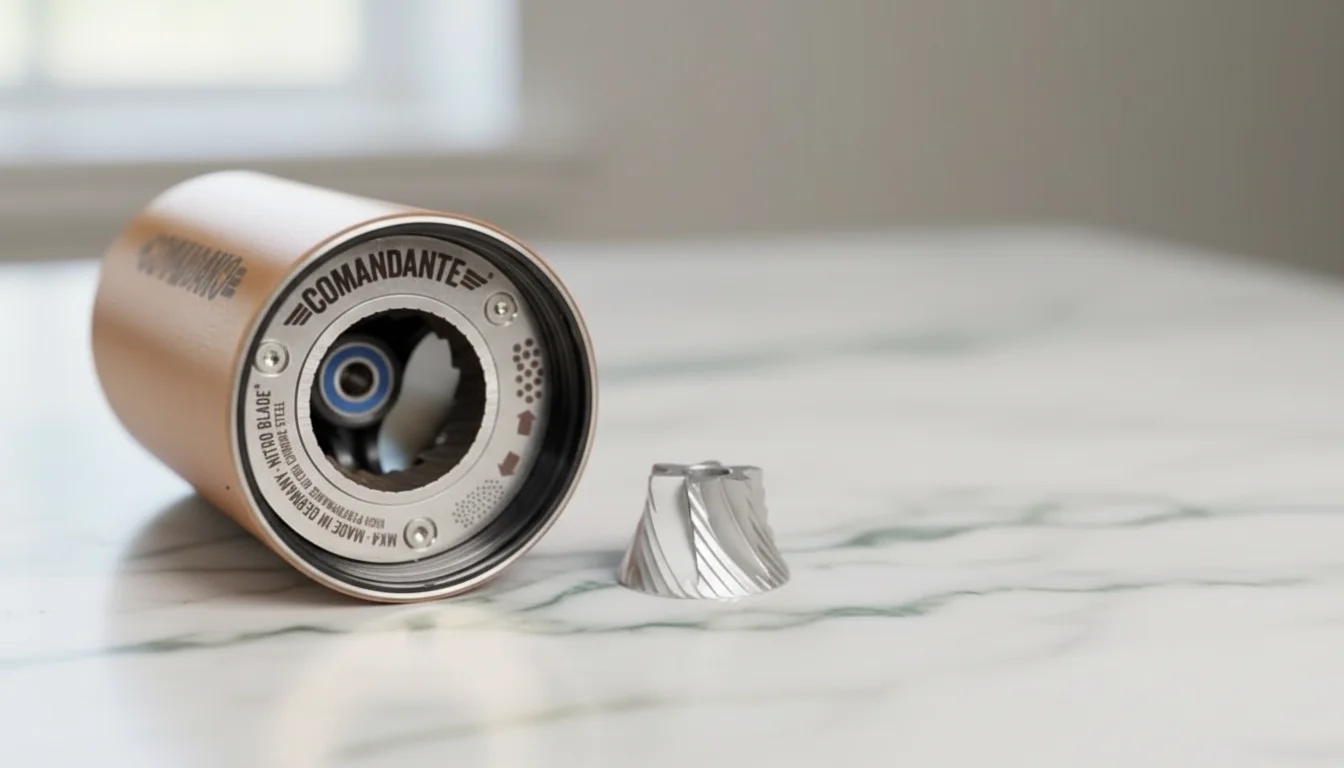
We wanted to understand why Comandante commands such a high price point, so we started with the Nitro Rex steel. Most grinder manufacturers use AISI 420 stainless steel for their burrs. AISI 420 works and it is cheap, but it corrodes over time, especially when exposed to moisture from techniques like RDT.
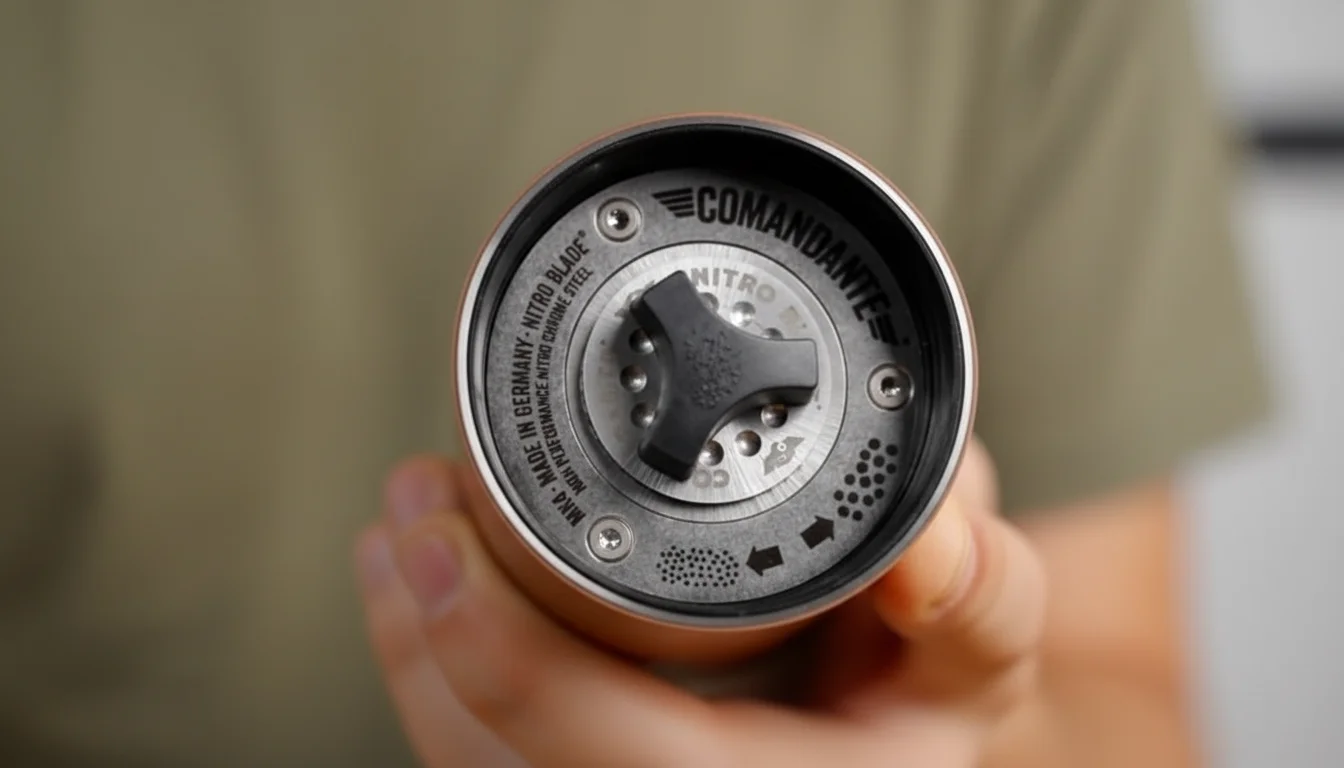
The Nitro Blade takes a different path. Comandante uses a high-nitrogen martensitic stainless steel processed through Electro-Slag Remelting. This ESR process strips impurities from the alloy, creating an extremely fine grain structure that holds an acute cutting edge without micro-chipping. We calculated the Pitting Resistance Equivalent Number at approximately 24.8, nearly double the 13.0 PREN of standard 420 steel.
What does this mean during actual use? After four months of daily grinding, including dozens of doses where we applied the Ross Droplet Technique with water mist, our burrs show zero signs of localized corrosion. The cutting edges remain factory-sharp under a loupe. Many competing grinders require titanium nitride or diamond-like carbon coatings to resist oxidation, but these coatings add thickness to the blade apex and slightly round the cutting edge. The Kinu M47 uses Black-Fusion PVD at 63 HRC, which adds durability without rounding the cutting edge. The Nitro Blade ships uncoated with an extremely acute edge geometry that our metallurgist contact estimated at under 20 degrees.
The hardness rating exceeds 58 HRC on the Rockwell scale. We spoke with a metallurgist who confirmed this places the burrs in the same category as aerospace-grade cutting tools. Comandante states these burrs can grind raw spelt, corn, and rye without edge deformation. We did not test grain milling, but the claim aligns with the material science.
High-nitrogen steel explains the price tag. Machining ESR-remelted steel requires specialized tooling and slower feed rates, which inflates production costs. The burrs should outlast most users, which makes the upfront cost easier to stomach.