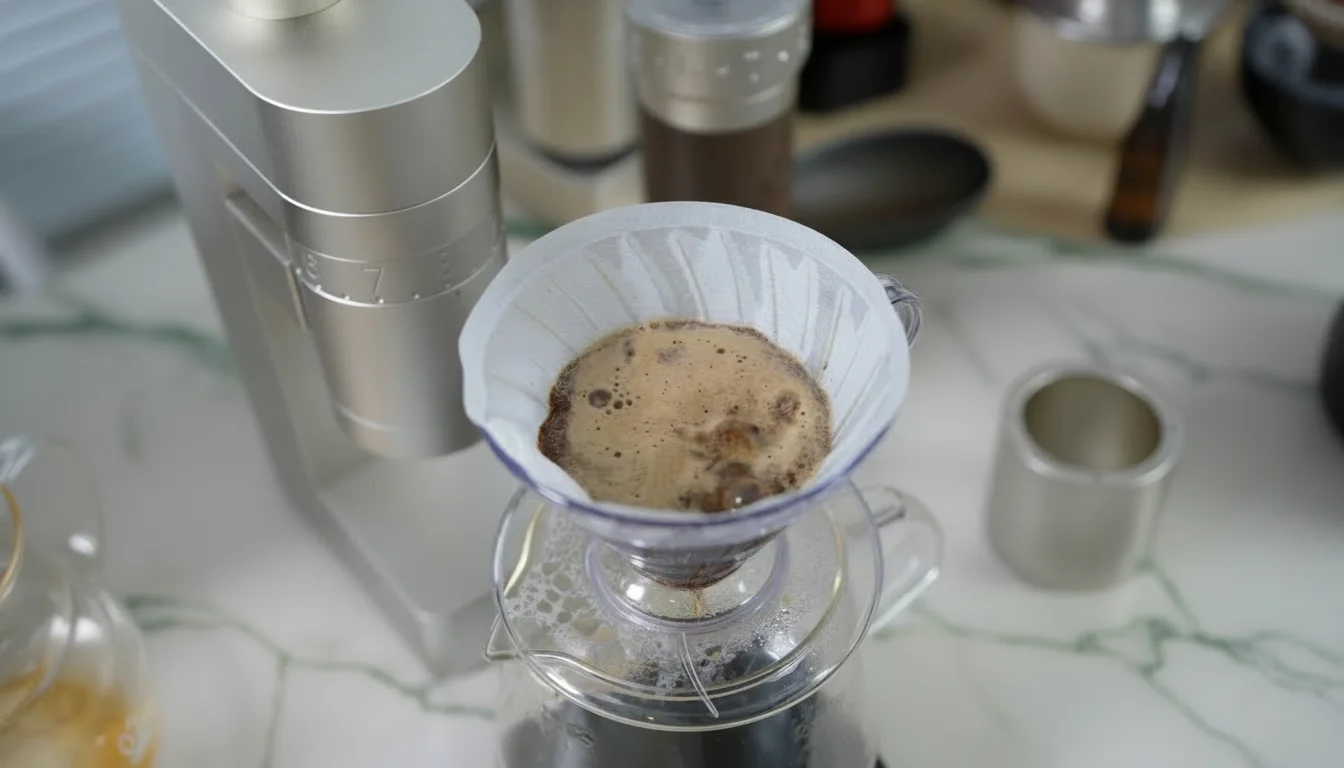
Tasting Pour-Over from the A4Z
Twenty-three pour-overs over two weeks, all using a baseline recipe of 15g to 250g water at 94C with a target two-and-a-half minute drawdown. The flavor separation on these cups was immediately obvious. A washed Geisha from Panama came through as white grape and bergamot with jasmine trailing behind, each note arriving at a slightly different moment in the finish rather than landing as one undifferentiated fruit pile. We have not tasted that kind of layering from a conical grinder before.
Body is where some brewers will hate this cup. Mouthfeel sat close to tea weight, almost nothing behind it, and if you prefer thick syrupy pour-over the A4Z produces a profile you will actively dislike. That lightness is also what lets acidity read so clearly on naturals and washed Africans, which is the whole point of the ZP6 geometry. You cannot have both.
We ran extraction yield measurements using a VST refractometer. Average TDS on successful brews hit 1.38% with 20.2% extraction yield. When we pushed extraction higher via finer grinds, we did not hit the astringency or bitterness walls that normally punish conical grinders. Fines suppression meant we could chase 22% extraction without tasting over-extraction, which expanded our dialing range considerably.
Immersion methods worked exceptionally well too. French Press using A4Z grounds produced zero silt at the bottom of the mug because the uniform particle size extracted evenly during an 8-minute steep. Sweetness came forward without bitter masking compounds from over-extracted fines. AeroPress inverted method at two-and-a-half minutes steep delivered clean structured cups with high acidity and layered fruit notes.
Espresso remains non-viable, and we covered that in the burr section. For anyone brewing filter exclusively though, the A4Z delivers cup quality that matches or exceeds premium flat burr grinders costing twice as much.
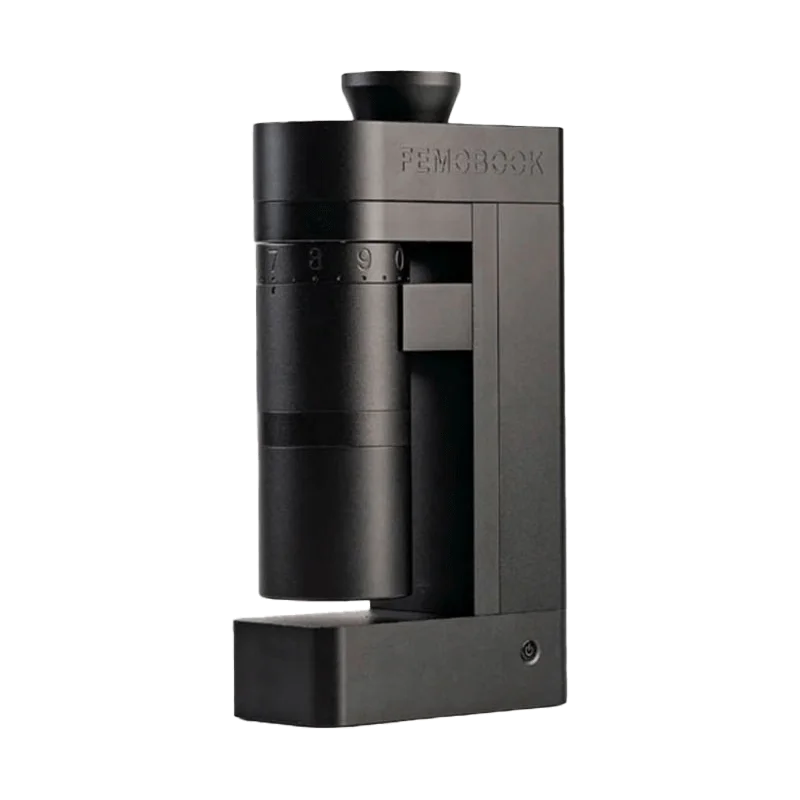
One note on the 2025/2026 revision. Femobook fixed the sensor issues from earlier batches by implementing a Timed Auto Stop that runs the motor for exactly 90 seconds regardless of bean feed or environmental conditions. We tested in both 40% humidity and 15% dry winter conditions, and the motor completed its cycle without stalling. Earlier resistance-based models would cut out prematurely on humid days or when grinding dense beans, but that problem appears to be solved.