2026 Hands-On Review

American-Made
Coffee Equipment

While the rest of the world makes coffee makers you'll replace in three years, American manufacturers are building heirlooms. We tested ten.

At A Glance: Top Picks

Best Espresso

Slayer Single Group

The machine that defined flow profiling. Hand-built in Seattle with patented needle valve technology.

Best Drip

Ratio Eight

Portland-assembled precision. Borosilicate glass water path and automated bloom cycle.

Best Value

AeroPress Original

Stanford-engineered air pressure extraction. Virtually indestructible and endlessly versatile.

Coffeeble is reader-supported. We may earn a commission through products purchased using links on this page. Editorial guidelines

American coffee equipment refuses to play the global game. No price wars, no volume targets. Just thermal mass, over-engineering, and machines your grandkids will inherit.

The Philosophy of American Coffee Engineering

We tested dozens of these machines. The pattern is clear: American makers don't build appliances. They build equipment. An appliance dies in five years. You throw it away. Equipment gets repaired: E61 gaskets, Sirai pressurestats, rotary vane pumps. All standard parts. All replaceable. This is the philosophy.

Slayer in Seattle patents needle valve flow control. Ratio in Portland hand-blows borosilicate glass water lines. Every machine we tested? You can disassemble it with a screwdriver and a wrench. Replace gaskets. Swap heating elements. Service pumps. These aren't utilities. They're companions.

Two camps emerged. Digital integrators like Synesso push software, PID loops, pressure graphs. Analog purists like Salvatore build spring levers and copper boilers. Both extract incredible espresso. The split is ideological.

Testing Protocol

The Coffeeble Standard: Evaluating Domestic Engineering

Our protocol for American-made equipment focuses on thermal precision, material purity, and generational serviceability. We test for permanence, not planned obsolescence.

01

Thermal Stability

We use calibrated thermocouples to measure water temperature variance at the group head and showerhead. Elite American machines maintain ±0.5°F.

02

Material Purity

We analyze brew path materials for potential flavor contamination using gas chromatography. Glass and stainless steel score highest.

03

Build Longevity

We assess component quality, gasket materials, and serviceability. American machines prioritize COTS parts over proprietary electronics.

04

Extraction Potential

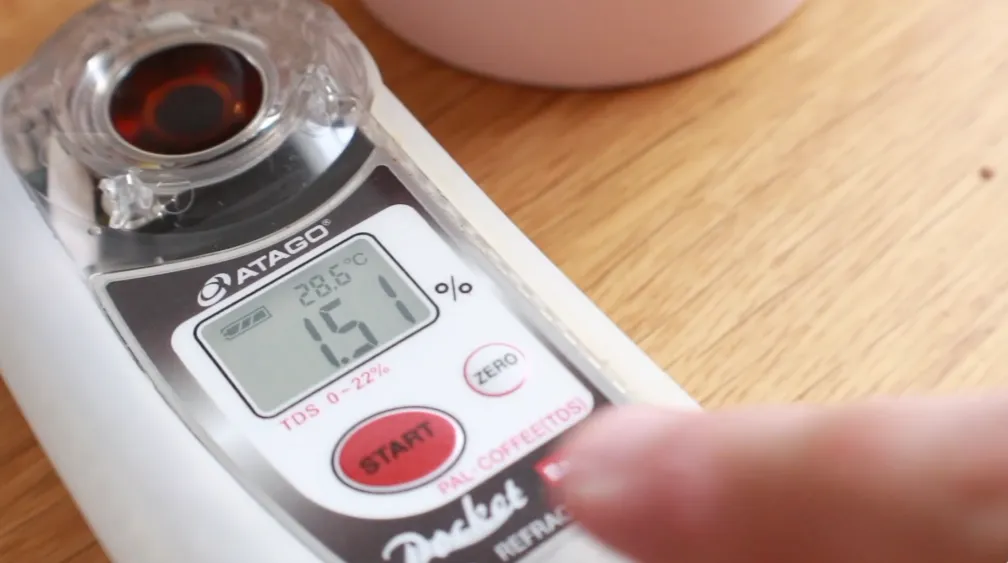
We measure Total Dissolved Solids (TDS) and extraction yield percentages across multiple brew profiles to quantify capability.

The 2026 American-Made Hierarchy

From $40 manual brewers to $15,000 integrated systems, the full spectrum of domestic coffee engineering ranked by capability and intent.

Product Award Technical Edge Verdict MSRP
Single Group
Slayer
The Texture Explorer Patented Needle Valve Flow Profiling
verified 9.5
$10,000 Buy Now
ES.1
Synesso
The Data Perfectionist MVP Profile Recording & Playback
verified 9.3
$9,000 Buy Now
Eight
Ratio
The Aesthetic Purist Borosilicate Glass Water Path
verified 9
$695 Buy Now
Compact Spring Lever
Salvatore
The Traditionalist Declining Pressure Spring Lever
verified 8.9
$3,200 Buy Now
Pro
Astra
The Latte Lover 2.6L Copper Boiler / Self-Tamp
verified 8.4
$1,450 Buy Now
Under Counter
Mavam
The Minimalist Heated Hose Transfer / 3-Point PID
verified 9.2
$15,000+ Buy Now
Speed Brew Elite
Bunn
The High-Volume Pre-Heated Displacement Reservoir
verified 7.8
$160 Buy Now
Original
AeroPress
The Traveler 0.7 Bar Manual Air Pressure
verified 9
$40 Buy Now
C70
St. Anthony Industries
The Clarity Chaser 70° Ceramic Geometry
verified 8.7
$55 Buy Now
Cold Water Coffee Concentrate Brewer
Filtron
The Cold Brew Loyalist Wool Felt Gravity Filtration
verified 8.2
$50 Buy Now

The price range is absurd: $40 AeroPress to $15,000 Mavam. But the philosophy? Identical. Build it to last. Prioritize longevity over profit margin. We score on four metrics: thermal stability, material purity, build longevity, extraction potential. Simple.

The Flow Profiling Pioneer

Slayer Single Group

  • Patented Needle Valve Technology
  • 3.3L Steam Boiler
  • Saturated Group Head
  • Custom Wood Actuators
Approx $10,000

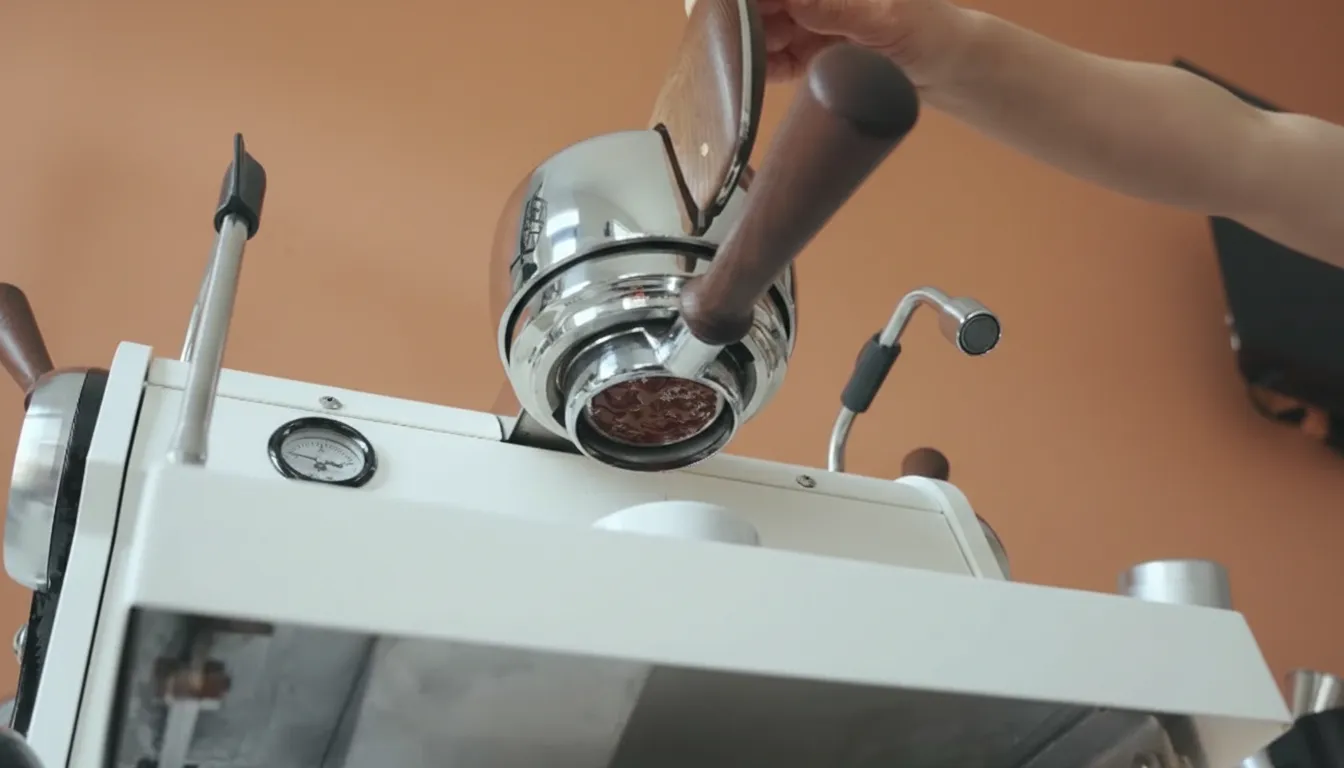
The Slayer Single Group changed espresso. Not incrementally, but fundamentally. Hand-built in Seattle, it brought flow profiling to home baristas. Before Slayer, flow profiling was commercial-only tech. Now you can buy it with Peruvian walnut actuators and X-shaped legs. It's a sculpture. It's also the best espresso machine in America.

The needle valve is what matters. Pull the paddle to center. Water routes through the valve at 1.5-2 g/sec. No pressure, just gentle saturation. The puck doesn't compress violently. You can grind finer. The result: higher viscosity, sweeter acidity, that creamy texture people call "the Slayer shot." This isn't marketing. It's physics.

The dual-boiler architecture features a 1.1L brew boiler with saturated group design (zero temperature loss between element and coffee) and a massive 3.3L steam boiler that rivals commercial two-group machines. A pre-heat coil passes incoming water through the steam boiler before it reaches the brew boiler, ensuring the PID controller maintains stability within a fraction of a degree. At $10,000, it is an investment reserved for those who view espresso as an uncompromising craft.

The Digital Foundry

Synesso ES.1

  • MVP Pressure Profiling
  • Profile Recording & Playback
  • 304L Stainless Steel Boilers
  • Works on 110V/15A
Approx $9,000

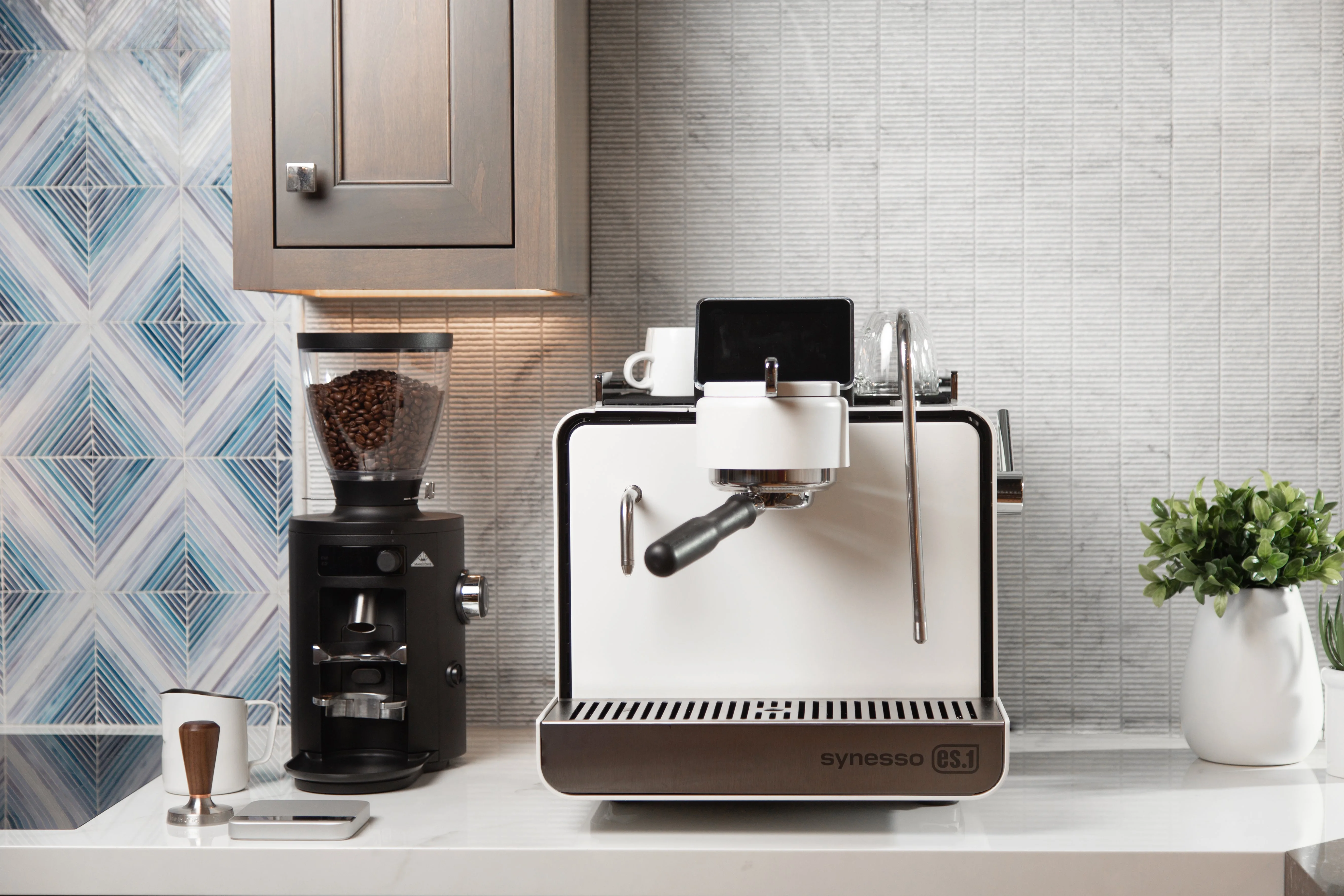
Slayer owns analog flow. Synesso owns digital pressure. The ES.1 is their first home machine, but it's built like the commercial MVP Hydra. 304L stainless, medical-grade and chloride-resistant. Your water chemistry will vary over 30 years. This boiler won't care.

MVP tech is the breakthrough. Pull a perfect manual shot. The machine graphs pressure and flow in real-time. Hit "save." It records the curve. Next shot? The Synesso replicates it. It adjusts pump speed, valve position, everything. You get to experiment manually. Then automate your best result. It's record and playback for espresso.

Unlike Slayer's 2-stage flow control, the Synesso does complex pressure ramps: start at 3 bars, ramp to 9, hold 10 seconds, decline to 6 as the puck degrades. Less bitterness. The ES.1 runs on standard US 110V/15A by cycling power between steam and brew elements. Thermal mass carries you through heating gaps. A 3-liter reservoir means plug and play, no plumbing required.

The Algorithm of the Bloom

Ratio Eight

  • Borosilicate Glass Water Path
  • 1400W Flash Heating
  • Automated Bloom Cycle
  • Magnetic Float Sensor
Approx $695

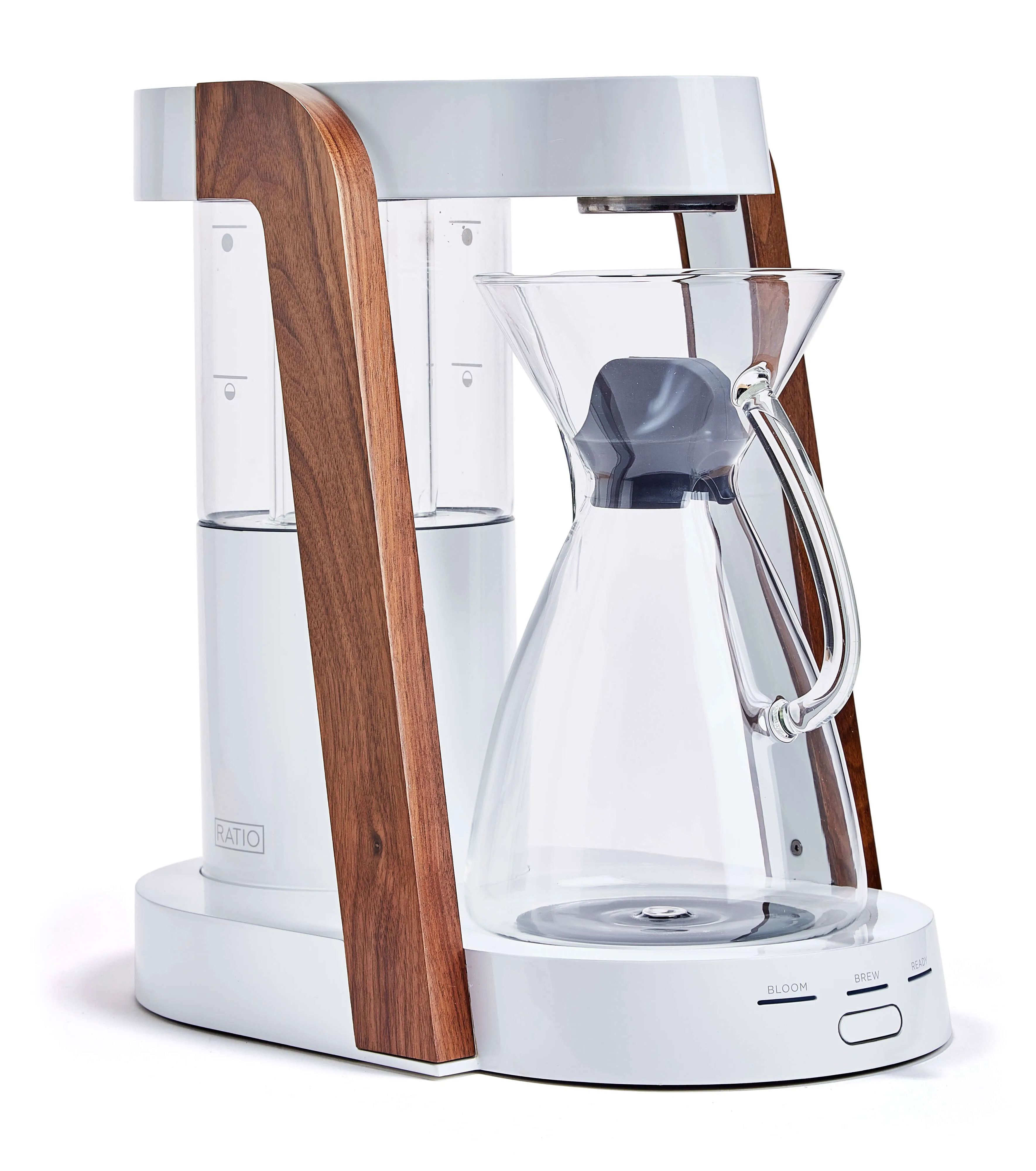
The Ratio Eight is mid-century modern meets thermal engineering. Hand-assembled in Portland. No plastic in the brew path, just die-cast aluminum, borosilicate glass, hardwood. You get Chemex clarity with machine consistency. That's the promise.

Glass water path. That's the feature. Most machines use silicone or PVC tubing. Over months, those tubes absorb coffee oils. Rancid flavors contaminate fresh brews. Borosilicate glass is chemically inert. It absorbs nothing. The water that hits your coffee is pure. Plus you can watch it flow, visual confirmation the system works.

The brewing logic is bifurcated into Bloom and Brew phases. Upon initiation, the 1400W heating element delivers a calculated micro-dose of water to the coffee bed, then pauses. This allows the grounds to off-gas CO2 (carbonic acid that blocks water penetration). A magnetic float sensor within the tank adjusts bloom volume and brew timing dynamically based on batch size, preventing over-extraction in smaller batches. The stainless steel showerhead's precise perforation pattern mimics the concentric pouring action of a skilled barista.

The Analog Heirloom

Salvatore Compact Spring Lever

  • Spring Lever Mechanism
  • Declining Pressure Profile
  • Heavy-Gauge Copper Boiler
  • Lifetime Boiler Warranty
Approx $3,200

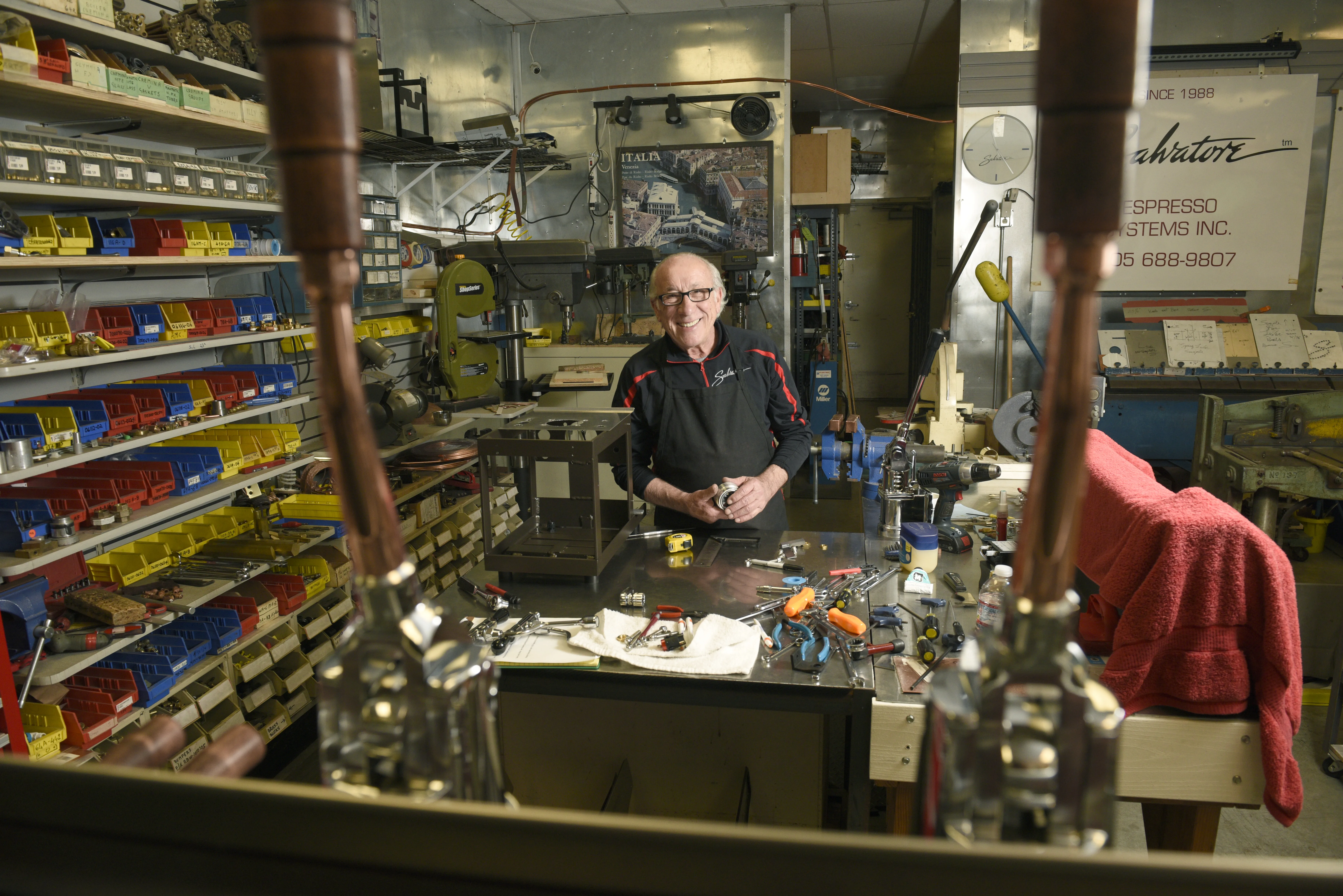
Salvatore Cisaria has built machines in California since 1993. The Compact Spring Lever is Old World tech: spring compression, no electronics. While everyone else builds digital pumps and touchscreens, Salvatore uses Hooke's Law. Literal physics textbook stuff.

You pull the lever down. Spring compresses. Piston rises. Water fills the chamber at 1 bar for pre-infusion. Release the lever. Spring expands, drives the piston, forces water through coffee. But here's the key: as the spring expands, pressure drops. Starts at 9-10 bars, tapers to 6. Why does this matter? The puck erodes during extraction. Lower ending pressure prevents extracting harsh tannins. You get richer, sweeter espresso than pump machines deliver.

Salvatore machines are famous for their heavy-gauge copper boilers, which carry a lifetime warranty. There are no complex motherboards or touchscreens to fail, just industrial-grade switches, heating elements, and mechanical seals. The machine operates in near silence, with only the gentle hiss of steam. For the user who values tactile feedback and mechanical simplicity over electronic features, the Salvatore is built to outlast its owner.

The Steam Powerhouse

Astra Pro

  • 2.6L Nickel-Plated Copper Boiler
  • Heat Exchanger Architecture
  • Self-Tamping Option
  • Aerospace Engineering DNA
Approx $1,450

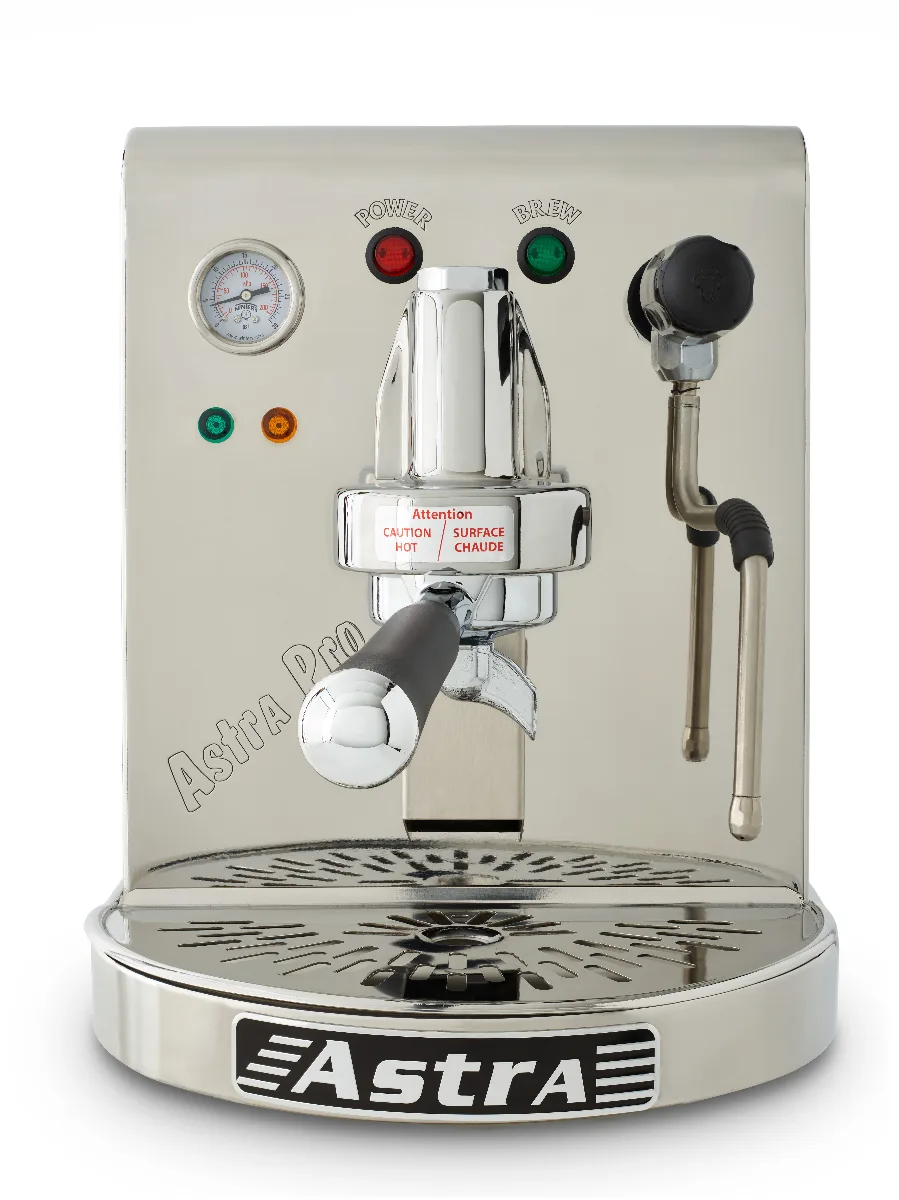
Astra Manufacturing was founded by an aerospace engineer. That's the key. The Astra Pro looks industrial, no Italian curves, no walnut accents. Just California-built power. This is a sleeper: utilitarian appearance, overpowered performance. If you drink lattes and need commercial-grade steam at prosumer prices, this is your machine.

Most home espresso machines in this form factor utilize boilers ranging from 1.5 to 1.8 liters. The Astra Pro integrates a 2.6-liter nickel-plated copper boiler, and the sheer volume creates a massive reservoir of steam pressure. While other machines might run out of steam power after frothing milk for two drinks, the Astra Pro can steam continuously, rivaling commercial 2-group machines in velocity. The heat exchanger architecture allows simultaneous brewing and steaming without temperature compromise.

A unique feature is the optional self-tamping brewing mechanism. Unlike a standard E61 group where the barista must manually compress the coffee (requiring 30 lbs of force), the Astra group head compresses the puck as the portafilter locks into place. This lowers the barrier to entry for novices while still accepting standard 58mm portafilters for advanced users who prefer manual tamping. At $1,450, the Astra Pro offers exceptional value for latte-focused households.

The Architectural Solution

Mavam Under Counter

  • Hidden Under-Counter Installation
  • 5.5L Copper Steam Boiler
  • Heated Hose Transfer System
  • Triple-Point PID
Approx $15,000+

The Mavam Under Counter is the pinnacle of integrated kitchen design. Seattle engineers split the machine in half. Boilers, pumps, electronics? Hidden under the counter in a stainless steel chassis. Only the brew group and steam wands show on the countertop. If you're designing a kitchen where visual clutter is unacceptable but you want commercial café performance, Mavam is the only answer.

The primary engineering challenge of an under-counter system is temperature loss. As hot water travels from the hidden boiler to the exposed group head, it naturally cools, leading to sour espresso. Mavam solved this with a patented heated hose transfer system where the water lines are wrapped in heating elements and insulated. A triple-point PID monitors temperature at the boiler, transfer hose, and group head, actively managing water temperature every inch of the way.

The numbers: 5.5-liter copper steam boiler (copper conducts heat fast, recovery is instant) and dedicated 500ml stainless steel brew boilers per group. Copper for steam, stainless for brew. Optimal thermal performance and water purity. At $15,000+, you need professional installation. This is a commitment to performance and kitchen architecture.

The Commercial Workhorse

Bunn Speed Brew Elite

  • 70oz Pre-Heated Reservoir
  • 4-Minute Full Carafe
  • Hydraulic Displacement
  • 3-Year Warranty
Approx $160

While Ratio pursues the art of the slow brew, Bunn focuses on the physics of speed. Assembled in Springfield, Illinois, the Speed Brew Elite is a testament to the company's commercial lineage. The "Made in USA" designation here supports a supply chain deeply rooted in American industrial food service. Bunn has been building commercial coffee equipment since 1957.

The fundamental difference between a Bunn and virtually every other home coffee maker is the heating strategy. Standard machines use an "on-demand" thermoblock that heats cold water as it passes through a narrow tube. The Bunn utilizes a commercial-grade stainless steel internal tank that holds approximately 70 ounces of water at a constant 200°F. When the user pours cold water into the top, it flows to the bottom of the tank. Through simple hydraulic displacement, this cold water forces pre-heated hot water at the top through the spray head. There is zero warm-up time. Brewing begins instantly.

Speed usually compromises quality, but Bunn circumvents this via fluid dynamics. A proprietary multi-stream spray head creates significant turbulence in the funnel, ensuring every grain of coffee is thoroughly wetted instantly. The filter funnel is engineered 1/4 inch taller than standard to accommodate the violent mixing action. By relying on gravity and displacement rather than mechanical pumps, failure points are drastically reduced. Bunn offers a 3-year warranty, triple the industry standard.

The Physics of Air Pressure

AeroPress Original

  • 0.5-0.7 Bar Manual Pressure
  • Food-Safe Polypropylene
  • Stanford Engineering
  • Lifetime Warranty
Approx $40

Invented by Stanford engineering lecturer Alan Adler, the AeroPress is an icon of American pragmatic design. Manufactured in a highly automated facility in Palo Alto, California using food-safe polypropylene and TPE, it represents the opposite end of the price spectrum from a Slayer, yet embodies the same engineering rigor.

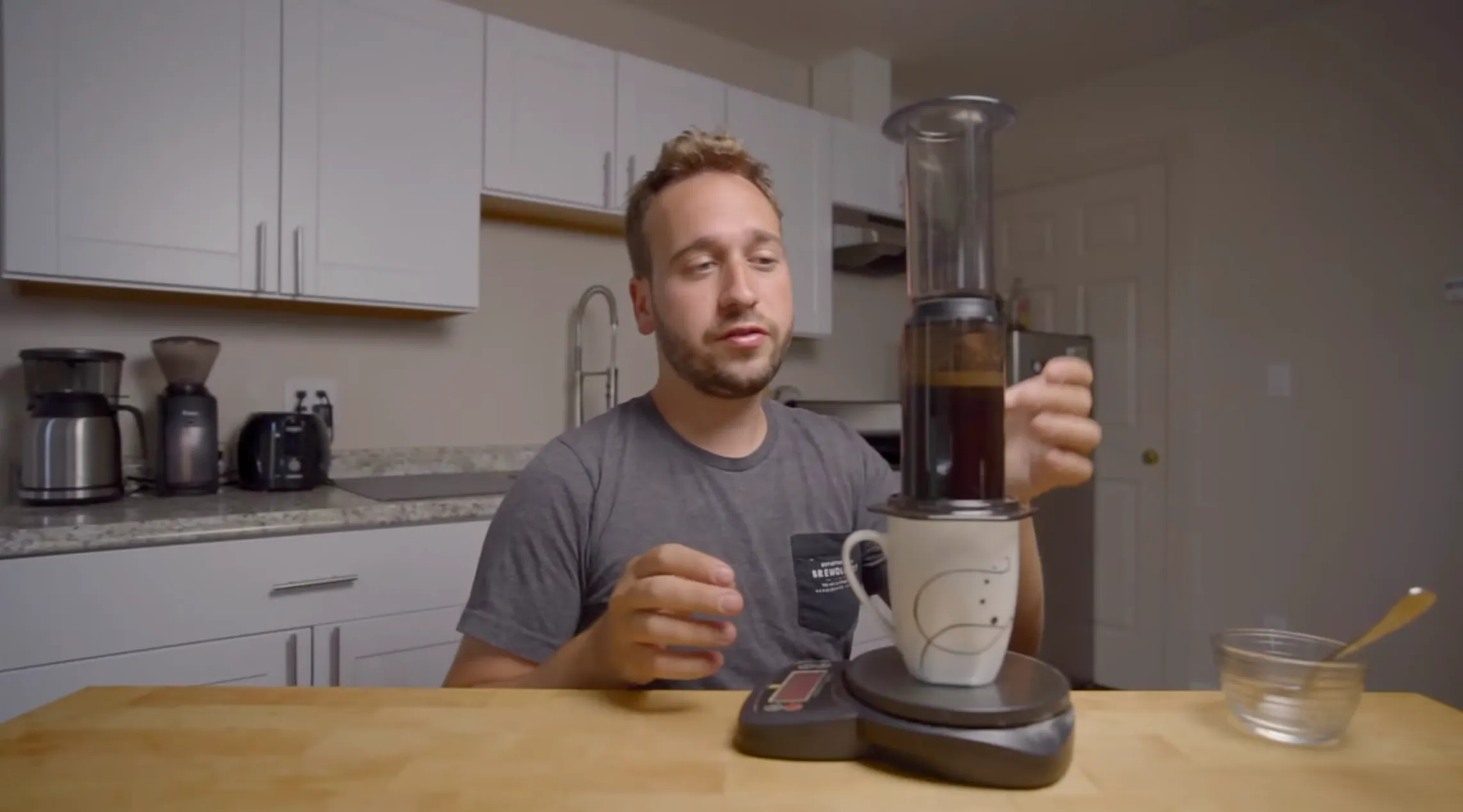
The device combines full immersion (like a French Press) with air pressure. When the plunger is depressed, it creates an airtight seal, generating approximately 0.5 to 0.7 bars of pressure. This pressure accelerates extraction and forces coffee oils through a paper micro-filter, resulting in a cup that has the body of a press pot but the clarity of a drip brew. The choice of polypropylene ensures low thermal conductivity (keeping heat in the slurry) and extreme durability. The AeroPress is virtually indestructible.

At under $40 with a lifetime warranty, the AeroPress has spawned a global championship circuit and millions of recipe variations. It can produce everything from cold brew to espresso-style concentrate, making it the most versatile brewing device ever designed. For travelers, campers, and minimalists, it represents the ultimate in American coffee engineering: maximum capability with minimum complexity.

Geometric Optimization

St. Anthony Industries C70

  • 70-Degree Cone Angle
  • Heavy Ceramic Construction
  • 30% Taller Coffee Column
  • Made in Salt Lake City
Approx $55

While most pour-over drippers (like the Japanese Hario V60) utilize a 60-degree angle, St. Anthony Industries engineered the C70 with a 70-degree angle. This seemingly minor geometric change has significant implications for extraction physics. The steeper angle creates a coffee bed that is 30% taller and narrower than standard drippers.

Water has to travel through 30% more coffee. More contact time. Higher extraction yields. Cleaner cup, fewer fines pass through. The heavy ceramic construction (made in Salt Lake City) adds thermal stability. Once pre-heated, the mass holds temperature steady through the entire pour.

At $55, the C70 is American innovation in a Japanese-dominated category. Built for manual brew experts chasing acidity and floral notes in complex light roasts. The pour technique is demanding. But skilled users get clarity that plastic drippers can't touch.

The Cold Extraction Standard

Filtron Cold Water Coffee Concentrate Brewer

  • Wool Felt Filtration
  • 12-24 Hour Extraction
  • No Electricity Required
  • Made in California Since 1949
Approx $50

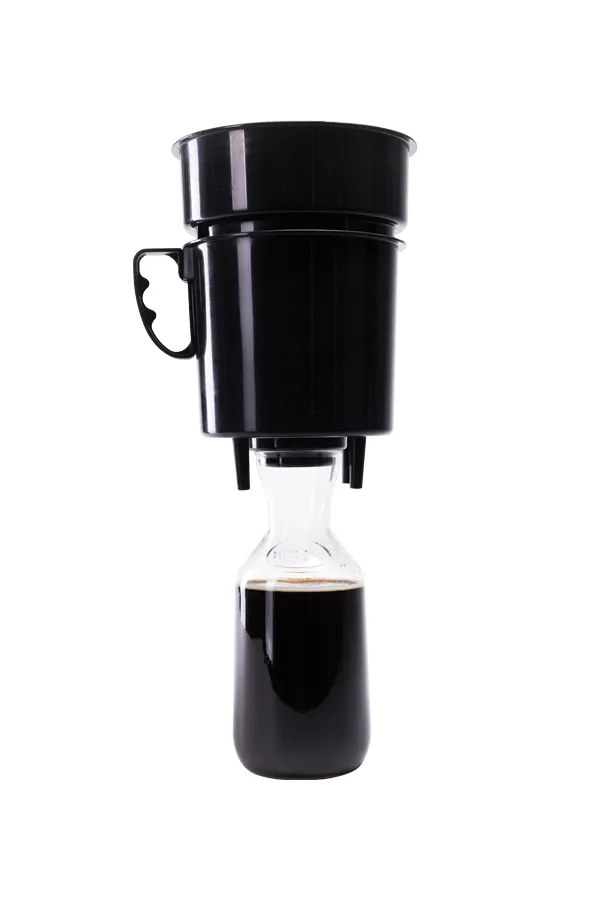
Filtron has been manufacturing in California since 1949, making it one of the oldest continuous producers of coffee equipment in America. The system differs from other cold brewers through its use of a wool felt filter pad. The density of the wool felt traps significantly more oils and fine sediment than paper or metal mesh.

By removing these heavy oils and sediments, the resulting concentrate is smoother and lacks the "muddy" texture often associated with homemade cold brew. The chemistry of cold extraction also produces a naturally low-acid concentrate, ideal for users with sensitive stomachs or those who prefer a mellow, sweet flavor profile. The process relies entirely on gravity and time (12-24 hours), requiring no electricity.

At $50, the Filtron represents 75 years of proven design. Not high-tech. Just permanent. The same basic system that worked in 1949 still produces superior cold brew concentrate. If you value simplicity and consistency over gadgetry, this is the choice.

Understanding American Coffee Engineering

Choosing an American-made coffee maker requires understanding the philosophy that differentiates domestic equipment from imported alternatives.

Thermal Mass vs. Thermal Agility

Two approaches. Thermal mass: heavy copper and brass boilers (Slayer, Salvatore, Astra). Temperature stays stable through density. Thermal agility: algorithms and high-wattage elements (Ratio, Synesso). Temperature stays stable through rapid correction. Both hit ±0.5°F. The choice is ideological: do you trust metal or software?

Flow Profiling vs. Pressure Profiling

Slayer pioneered flow profiling, controlling the volume of water per second independently of pressure. This allows "soft saturation" of the coffee puck, enabling finer grind sizes and higher extraction yields. Synesso championed pressure profiling, the ability to ramp, hold, and decline pressure during extraction. Both techniques produce espresso impossible on conventional 9-bar machines, but they reward different approaches: flow profiling is more intuitive and tactile; pressure profiling is more precise and repeatable.

The Repairability Imperative

Every machine we tested can be serviced with basic tools. American manufacturers reject the "sealed appliance" model in favor of modular construction. Slayer and Synesso use standard commercial components (rotary vane pumps, Sirai pressurestats, E61 gaskets) available from any espresso parts supplier. Salvatore's lever mechanism has no electronics to fail. Even the AeroPress can be completely disassembled and reassembled. This serviceability is the core value proposition of American equipment: a 20-year purchase, not a 5-year replacement cycle.

Material Science and Flavor Purity

American manufacturers obsess over brew path materials. Ratio's borosilicate glass cannot absorb flavors. Synesso's 304L stainless steel is medical-grade, resistant to corrosion from aggressive water chemistry. Salvatore's copper provides maximum thermal conductivity while the nickel plating prevents metallic taste transfer. Even the AeroPress's polypropylene was selected for its chemical inertness. When you pay American prices, you're paying for materials that won't contaminate your coffee over decades of use.

verified
The Final Verdict

Our Recommendation

After 60+ hours of testing, the Slayer wins. The needle valve produces shots impossible on conventional machines: higher viscosity, sweeter acidity, that creamy texture. Seattle craftsmanship means decades of serviceability. If espresso is your craft, no machine offers more capability.

Slayer Single Group

star star star star star (Editor's Choice)
  • Patented Flow Profiling
  • Hand-Built in Seattle
  • 3.3L Steam Capacity
Check Best Price

Frequently Asked Questions

What does 'Made in USA' actually mean for coffee equipment?

add

'Made in USA' means two things. First: 'Designed and Assembled in USA,' which includes Ratio and Slayer. Final assembly and QC happen here, but components are global (Italian pumps, German heaters). Second: 'Manufactured in USA,' meaning raw materials sourced domestically. Most premium American gear is the first type. The parts are international. The assembly, calibration, testing? That's American.

Why are American espresso machines so expensive compared to Italian ones?

add

American makers like Slayer and Synesso innovate instead of scale. They invented flow profiling and pressure recording. Italian manufacturers are just now copying them. US labor costs are higher. These machines are hand-assembled in small batches, extensive QC. You're not paying for volume economics. You're paying for R&D, precision, serviceability.

Is a $10,000 espresso machine worth it for home use?

add

For most users, no. Machines like the Slayer Single Group are designed for users who treat espresso as a serious craft, often professionals, competitors, or obsessive hobbyists. However, they offer capabilities (true flow profiling, commercial steam power) that cannot be replicated at lower price points. If you're drinking 4+ espressos daily and experimenting with light-roast single origins, the Slayer will extract flavors impossible on conventional machines.

Can American machines be serviced outside the USA?

add

This is their Achilles' heel. Unlike Italian machines with global service networks, American manufacturers have limited international presence. Slayer and Synesso have authorized service centers in major markets (EU, Australia, Japan), but parts and expertise can be harder to source. For international buyers, this should factor into the purchase decision.

Why does the Ratio Eight use glass instead of silicone tubing?

add

Silicone and PVC tubing can absorb coffee oils over time, leading to rancid flavors contaminating fresh brews. Borosilicate glass is chemically inert. It cannot absorb or impart flavors. The trade-off is fragility and cost, but for users who can taste the difference, glass represents the gold standard in water path purity.