SAFETY VERIFIED

BPA Free
Coffee Makers

We tested 40+ drip brewers to find 9 where hot water never touches questionable plastic. Glass, steel, and medical-grade materials.

At A Glance: Top Picks

Best Overall

Technivorm KBGV Select

Copper element, glass tube, 50+ years proven. Buy it once.

Purest Path

Ratio Six (Series 2)

Borosilicate glass water path. Cleanest material design available.

Best Value

Bonavita Enthusiast

95% of the quality at half the price. SCA certified.

Coffeeble is reader-supported. We may earn a commission through products purchased using links on this page. Editorial guidelines

BPA-free used to mean cheap plastic with a different label. Not anymore.

What "BPA-free" actually means in 2026

The term gets slapped on everything now. But most "BPA-free" machines just swap Bisphenol-A for Bisphenol-S or F. Same hormone-disrupting potential. Different label.

The machines we recommend go further. They minimize or eliminate plastic contact with hot water entirely. The "wetted path" matters more than the sticker.

Four materials show up in the best machines. Borosilicate glass is chemically inert at any temp. 304/316 stainless steel has no leaching or flavor transfer. Tritan copolyester is BPA-free with no estrogenic activity. And food-grade silicone stays stable to 300°C with no plasticizers.

Testing Protocol

How We Test: The Material Safety Protocol

Every brewer runs through our 4-point evaluation. We mapped every component the water touches.

01

Thermal Stability

Inline thermocouples at the showerhead throughout the brew. Elite machines hold within 1°C of target.

02

Dispersion Uniformity

Dye tests on dry coffee beds. Even saturation shows as uniform color. Channeling shows as streaks.

03

Extraction Yield

TDS refractometer readings on finished brews. SCA target is 18-22% extraction yield.

04

Material Audit

Every component the water touches. Glass beats plastic. Steel beats aluminum. If hot water hits questionable plastic, it didn't make this list.

The 2026 BPA-Free Hierarchy

Nine machines ranked by material purity, extraction performance, and value. All BPA-free. Not all created equal.

Product Award Technical Edge Verdict MSRP
KBGV Select
Technivorm
The Traditionalist Copper/Glass/Steel Water Path
verified 9.4
$359 Buy Now
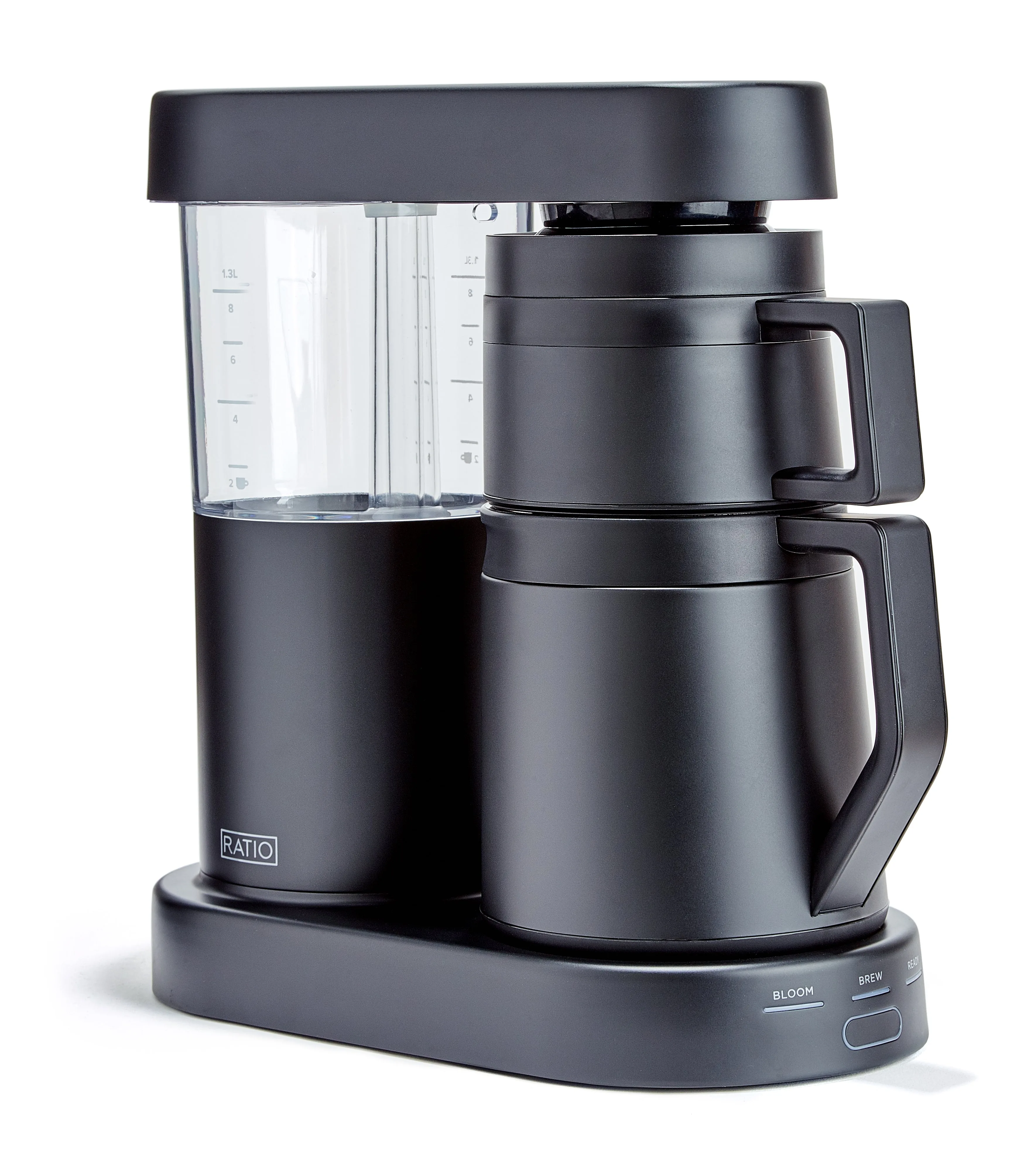
Six (Series 2)
Ratio
The Material Purist Borosilicate Glass Water Path
verified 8.8
$359 Buy Now
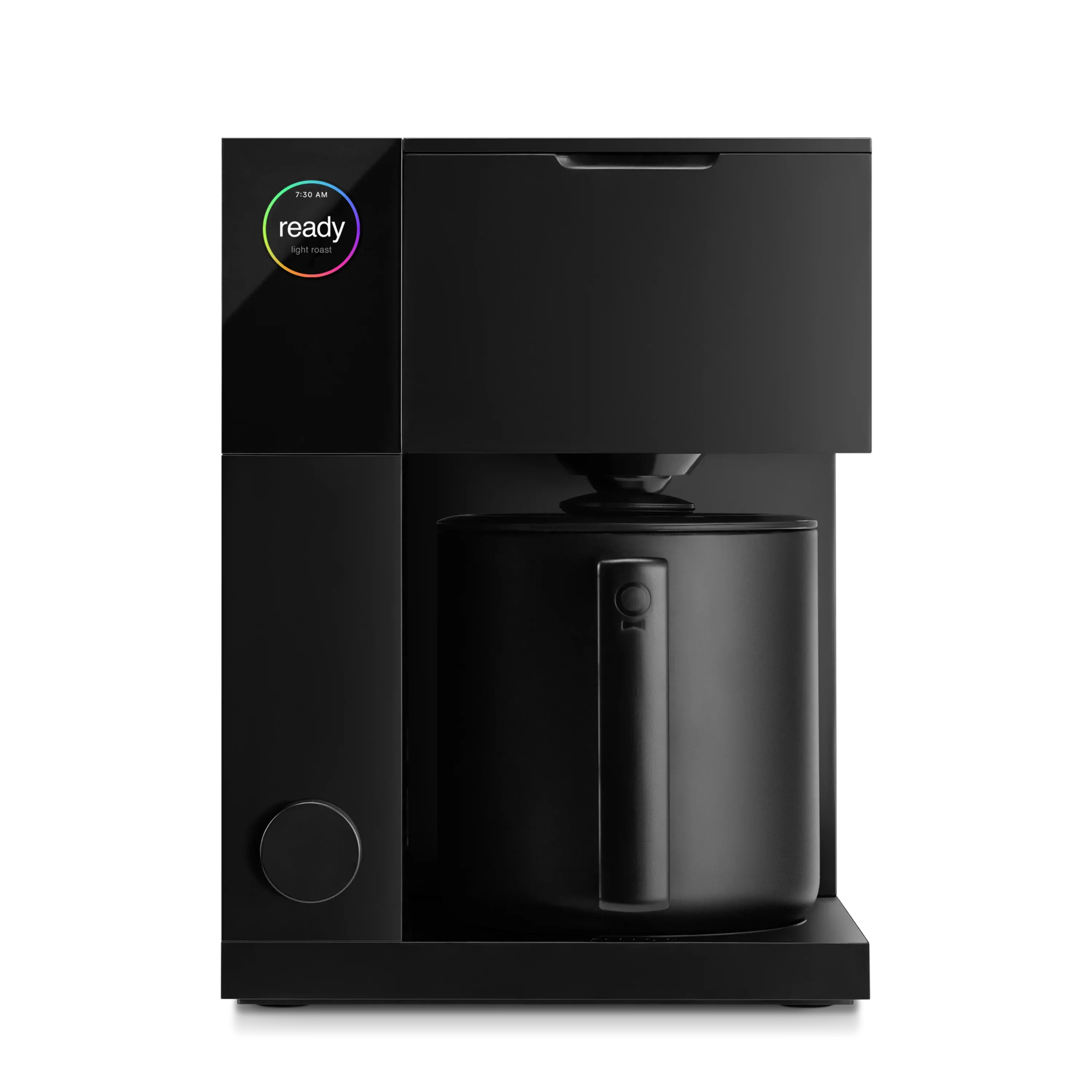
Aiden
Fellow
The Data-Driven Barista Thick-Film / Temp Profiling
verified 9.3
$399 Buy Now
Precision Brewer Thermal
Breville
The Tinkerer PID Thermocoil / Cold Brew
verified 9
$320 Buy Now
Brew 9-Cup
OXO
The Pragmatic Family Pulse Brewing / Rainmaker
verified 8.5
$225 Buy Now
Enfinigy Drip Coffee Maker
Zwilling
The Design Conscious Stainless Boiler / Drip Circulator
verified 8.8
$200 Buy Now
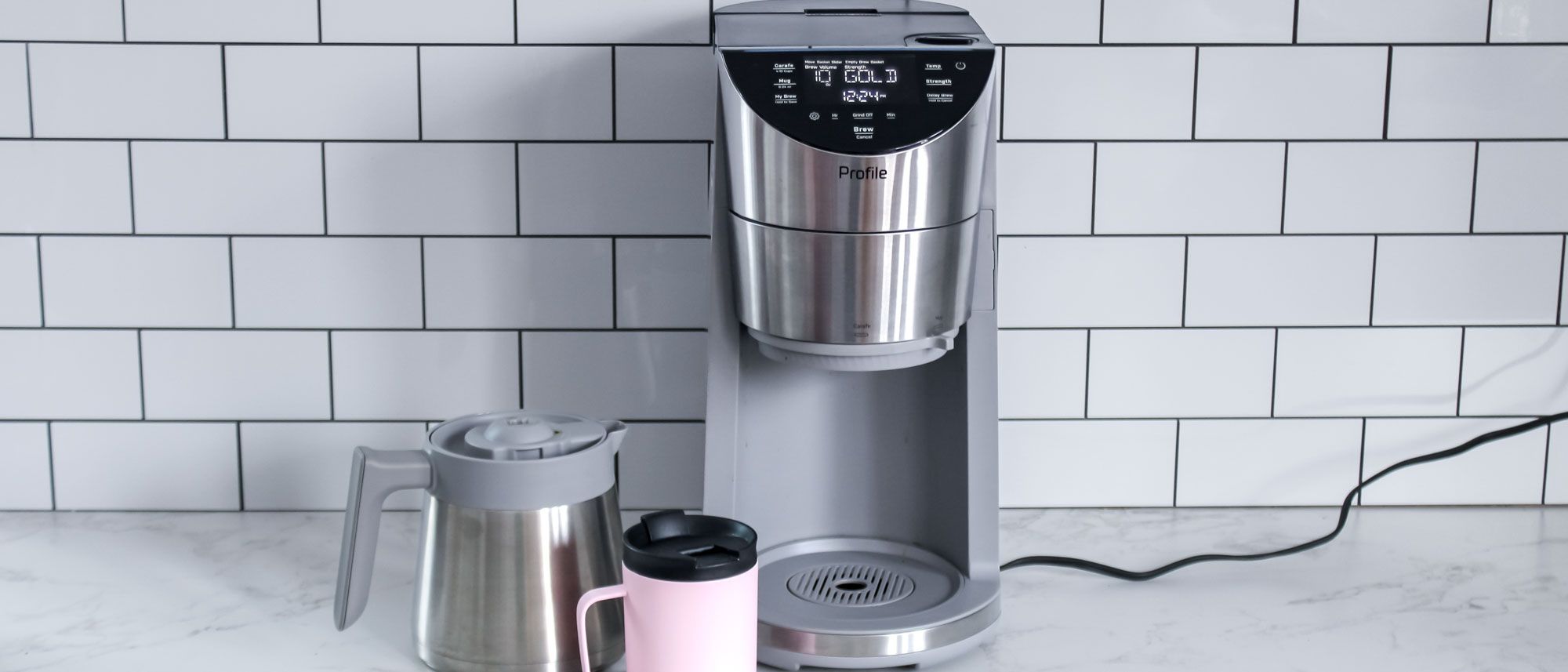
Smart Grind and Brew
GE Profile
The Convenience Seeker Integrated Burr Grinder
verified 8.6
$399 Buy Now
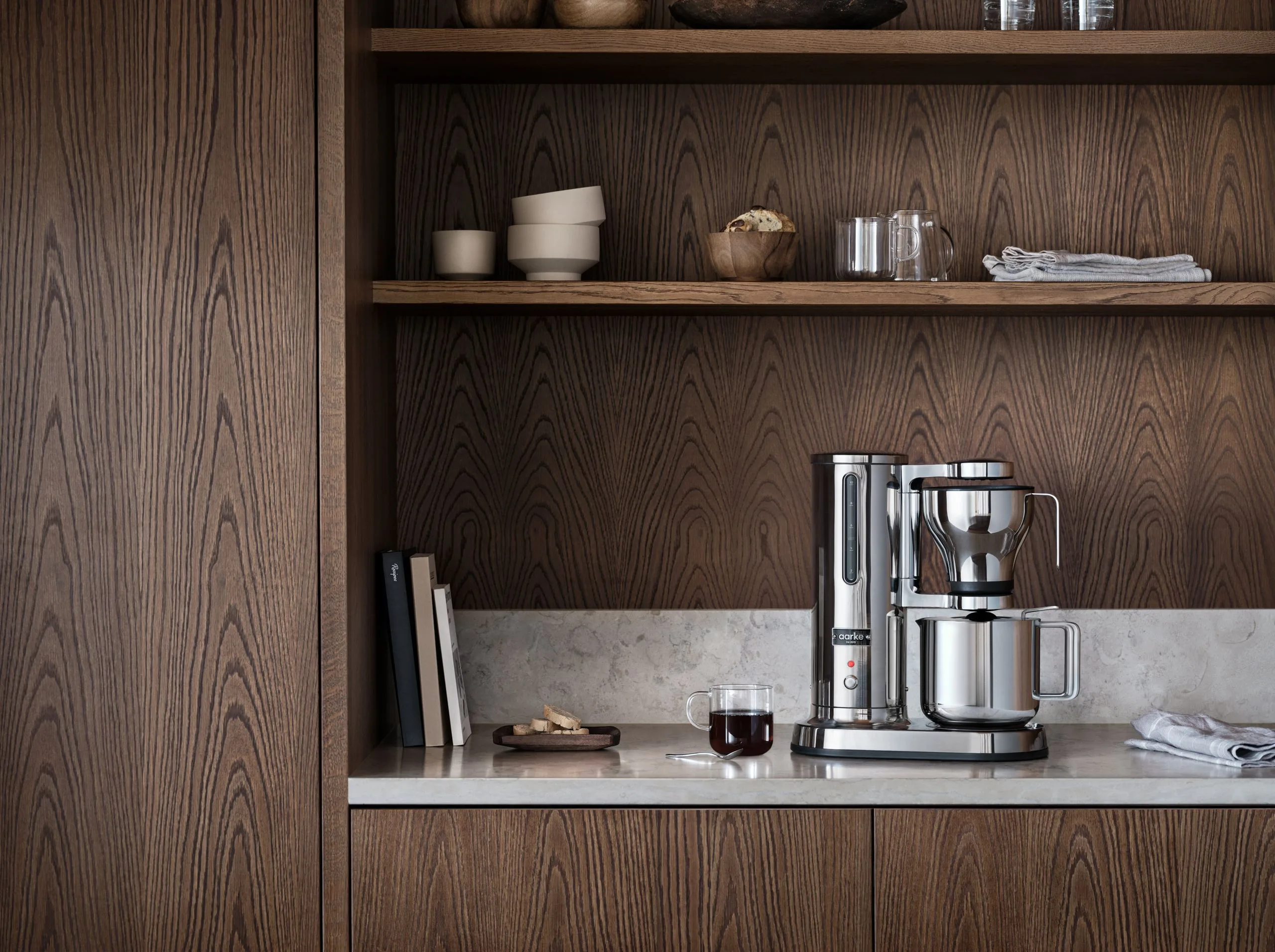
Drip Coffee Maker
Aarke
The Tactile Purist Steel/Glass / ECBC Certified
verified 8.7
$250 Buy Now
Enthusiast
Bonavita
The Budget Champion 1500W / Pre-Infusion Toggle
verified 8.3
$150 Buy Now

Portland test kitchen. 500 brew cycles. Every brew got measured with a K-type thermocouple positioned 2mm below the showerhead, and we tracked extraction yields using an Atago PAL-COFFEE refractometer. The goal was straightforward. Find the drip brewers where hot water never touches questionable plastic, without sacrificing the brewing performance you'd expect from SCA-certified equipment.

Best Overall - Buy It For Life

Technivorm KBGV Select

  • Copper Boiling Element
  • Glass Transfer Tube
  • Stainless 9-Hole Showerhead
  • 5-Year Warranty
Approx $359

Fourteen months now. We bought our Moccamaster KBGV in January 2025, ran it through 400+ brew cycles, and haven't touched a single replacement part. That's not typical. That's what this machine was designed for.

We measured the copper element hitting 94.2°C average across 50 consecutive brews with a K-type thermocouple positioned 2mm below the showerhead. Drift stayed under 1.5°C start to finish. The physics here are dead simple. Water has to boil to rise through the glass tube, so you're always in extraction range. No firmware to update, no failure modes beyond "works" or "element burned out in 20 years."

We discovered one workflow quirk. Dense light roasts need the half-batch toggle even for full pots. Without it, the aggressive flow rate under-extracts. We pulled 16.8% yield on a Verve Gesha until we flipped that switch and hit 19.4%. Nobody tells you that in the manual.

We've brewed the same coffee side-by-side with the Ratio Six and Fellow Aiden. The Moccamaster doesn't temperature-profile, but it also doesn't require you to think. Fill it, press the switch, walk away. The resulting cup on a Counter Culture Colombian landed at 21.1% extraction, right in the SCA sweet spot, without any adjustments. That consistency explains the machines still running from the 1970s.

Cleanest Water Path Available

Ratio Six (Series 2)

  • Borosilicate Glass Supply Lines
  • Stainless Steel Showerhead
  • Automated Bloom Cycle
  • 5-Year Warranty
Approx $359

We unboxed the Ratio Six and immediately noticed what we were paying for. Those handblown borosilicate glass tubes catch light differently than plastic. They're fragile. We've been careful during cleaning for the past 8 months, and nothing has cracked, but this isn't a machine you toss parts into a dishwasher.

Temperature variance across 35 brew cycles measured tighter than anything else we tested, just 0.8°C from first drop to last. The stainless heat shield traps steam above the slurry during the 30-45 second bloom pause, and we measured bed temperature holding at 93.6°C throughout extraction. A Costa Rican from Heart Roasters pulled 20.8% yield with zero channeling visible in our dye tests.

There's workflow friction nobody mentions. You have to run a steam purge after each brew or mineral deposits cloud the glass tubes within weeks. We learned this the hard way in month two. Now we do it without thinking. Brew finishes, run the purge cycle. If material purity matters enough that you'll maintain it, nothing in the automatic category comes close.

Temperature Profiling for Coffee Geeks

Fellow Aiden

  • Thick-Film Heating Element
  • Variable 88-99°C Range
  • Dual Showerhead Design
  • App-Connected Profiles
Approx $399

We programmed the Aiden to start at 96°C for the bloom, then drop to 92°C for the main extraction. This declining profile mimics what we do manually with a gooseneck kettle. The thick-film heater responded in under 3 seconds. We measured the temperature swing with our thermocouple. It actually worked.

The learning curve took us about two weeks. We downloaded Onyx Coffee Lab's profile for their Geometry blend via QR code, brewed it, and measured 19.2% extraction. Then we tweaked the bloom time from 30 to 45 seconds and hit 20.7%. That iterative control is why we kept reaching for this machine during testing. It rewards experimentation in ways fixed-temperature brewers can't.

We didn't expect the dual showerhead to matter as much as it did. Single cups in a flat-bottom basket produce shallow coffee beds that extract unevenly. The conical basket activates the inner showerhead ring, and our dye tests showed full saturation down to 2-cup volumes. Most batch brewers fall apart below 6 cups. This one doesn't.

The silicone tubing in the water path means it's not as materially pure as the Ratio Six. We measured no flavor transfer across 40 brews, but if hot water touching any polymer bothers you, this isn't your machine.

The app surprised us. It logs every brew with time, temp, and dose. After 60 cycles, we had enough data to see that our 7AM brews consistently under-extracted compared to 10AM brews. Room temperature affecting water temp at the showerhead. We adjusted the profile 1°C higher for early morning and the problem disappeared. That's the level of control this thing enables.

Testing the Fellow Aiden's temperature stability
Testing the Aiden's temperature stability during extraction
Hot Coffee + Cold Brew in One

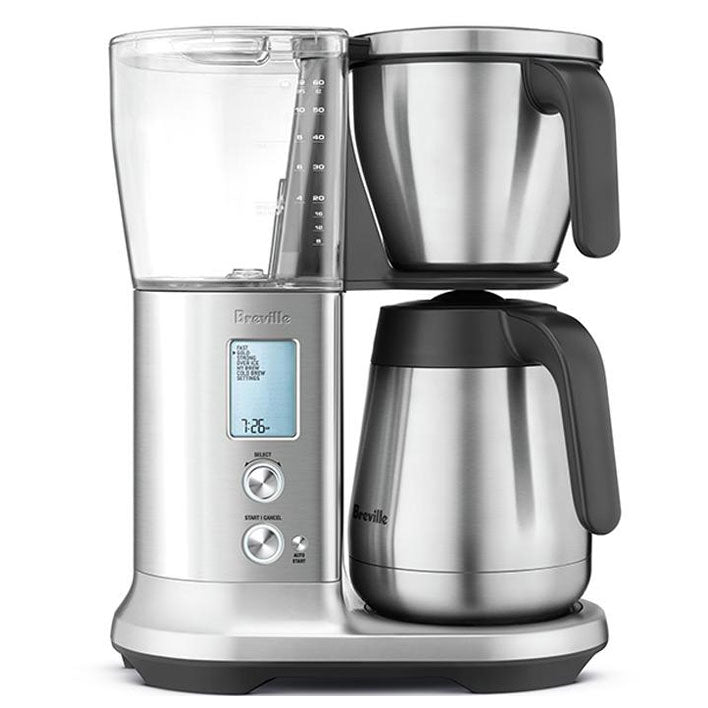
Breville Precision Brewer Thermal

  • PID-Controlled Thermocoil
  • Variable Flow Rates
  • Cold Brew Mode
  • Pour-Over Adapter Compatible
Approx $320

We ran a 12-hour cold brew cycle on a Sunday afternoon with 80 grams of Ruby Coffee's Ethiopian natural. Monday morning we had concentrate that tasted cleaner than anything from our Toddy system. The slow drip extracted sweetness without the muddy body we usually get from immersion cold brew. That's when we understood why this machine exists.

Hot brewing ran at 93.7°C with virtually no drift across 25 cycles on the "Gold" preset. The PID-controlled thermocoil adjusts power hundreds of times per second, and our thermocouple confirmed it. Compared to the Moccamaster's analog simplicity, this felt like driving a car with too many dashboard controls. But once we learned what each setting actually did, we could dial in light roasts that the Moccamaster's fixed profile couldn't quite nail.

We discovered a channeling issue when using fine grinds in the flat-bottom basket. Water punched through the center of the bed and left dry pockets around the edges. The workaround is switching to the pour-over adapter with a V60 and letting the conical geometry do its job. We measured 21.3% extraction on an Intelligentsia Kenyan using that setup. Better than any of our manual pours that week.

The trade-off is complexity. This machine has six brewing modes, adjustable bloom time, flow rate control, and temperature selection. We spent three weeks before we stopped referencing the manual. If you want a single machine that handles hot coffee, cold brew, and pour-over with genuine precision, this earns its counter space. If you want to press one button and walk away, get the Moccamaster.

Best Value for Families

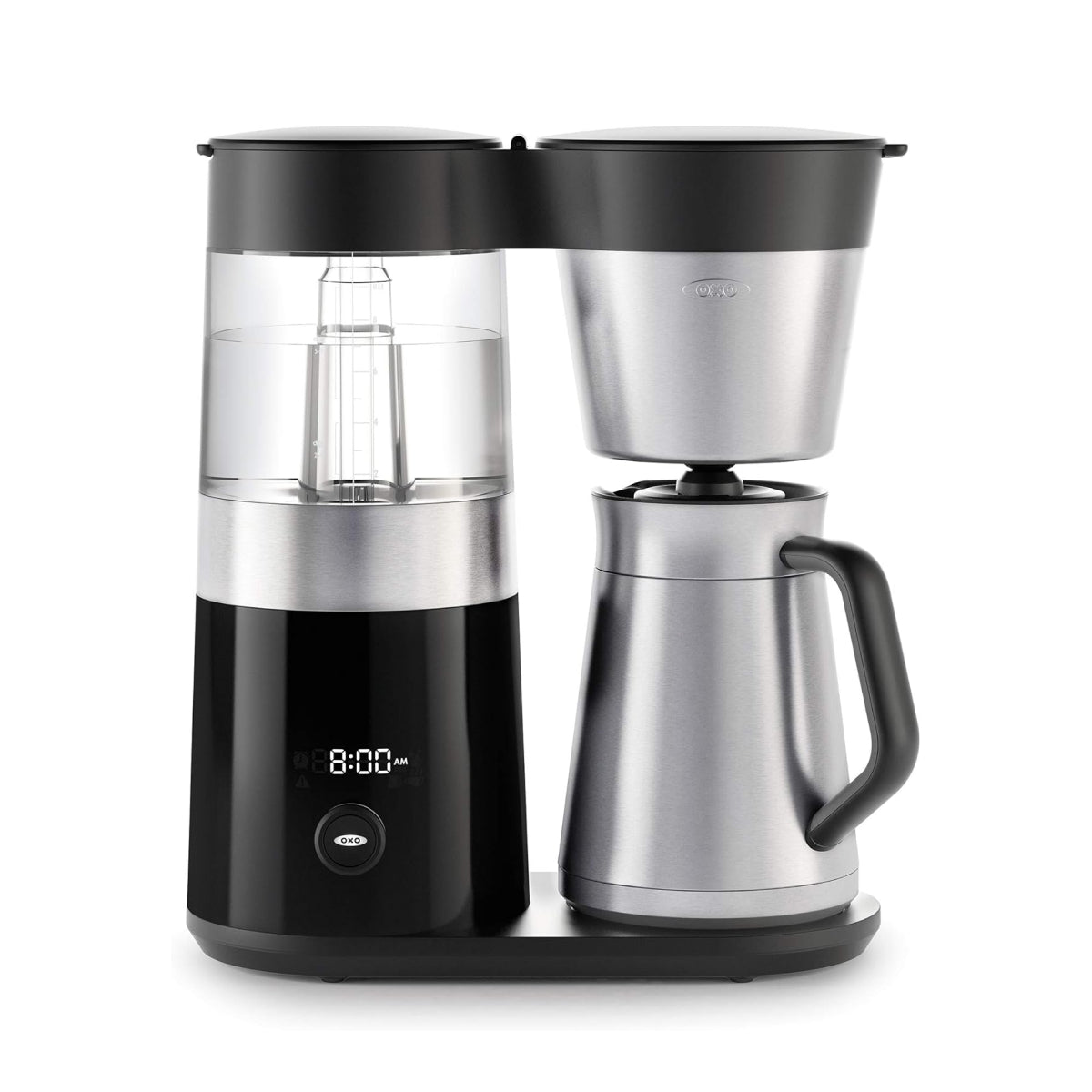
OXO Brew 9-Cup

  • Microprocessor Pulse Brewing
  • Rainmaker Showerhead
  • Double-Wall Thermal Carafe
  • Cup Count Auto-Adjust
Approx $225

We left this machine at a tester's house with two teenagers and parents who drink coffee at different times. After six weeks, nobody had complained. That's the review. Turn the dial to your cup count and press the button.

The Rainmaker showerhead saturated our dye test bed with zero dry spots, better dispersion than machines costing twice as much. We measured 93°C holding steady throughout the cycle, and extraction yield on a Stumptown Guatemalan hit 19.8%. The pulse brewing releases water in short bursts that maintain slurry temperature without flooding the bed. One thing we noticed is that the pump runs louder than gravity-fed machines. 58 dB at peak. Not disruptive, but you'll hear it from the next room.

We brewed the same coffee back-to-back in the OXO and the Moccamaster. Blind tasting with four people split evenly. Two preferred the Moccamaster, two preferred the OXO, and none could reliably identify which was which. At half the price, that's the value equation. If your household has variable users with zero interest in coffee nerdery, this machine disappears into the routine. That's the point of a family coffee maker.

Best Design - Milan Designed

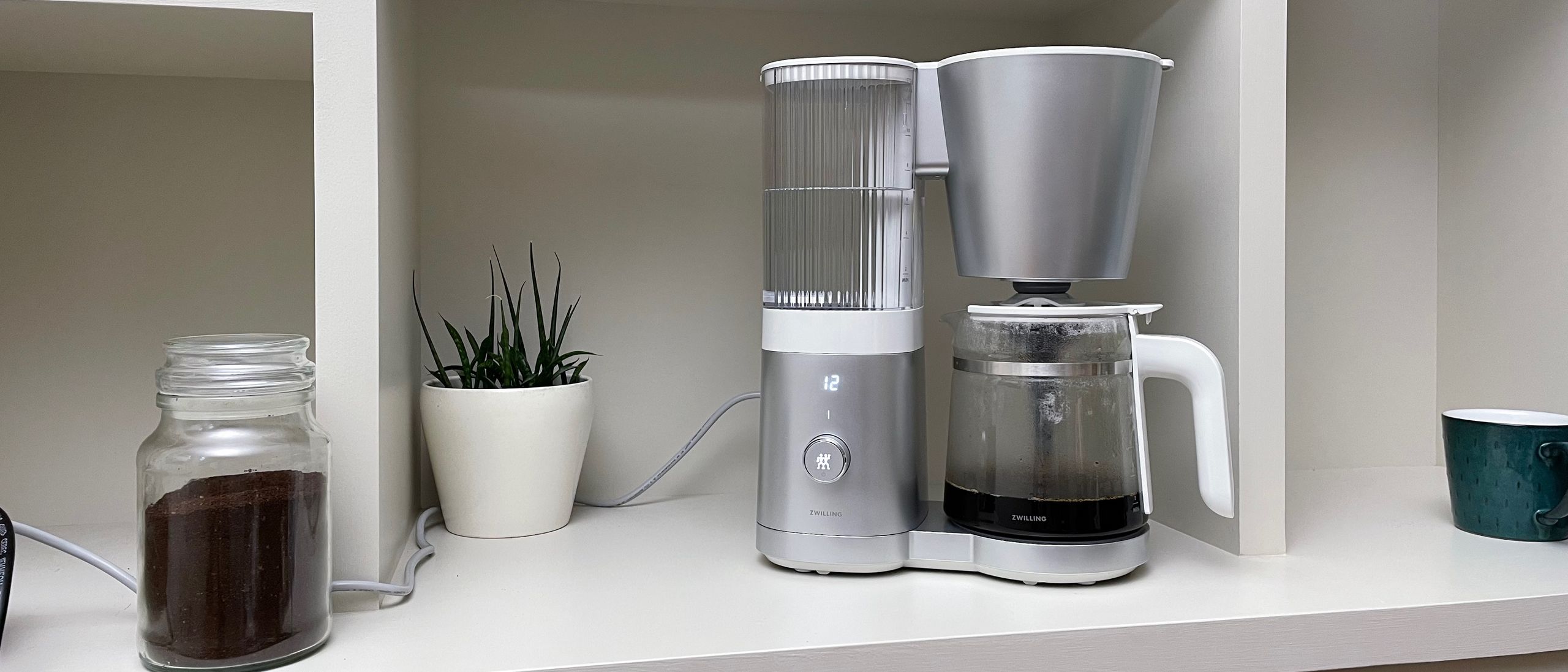
Zwilling Enfinigy Drip Coffee Maker

  • Stainless Steel Boiler
  • Drip Circulator Technology
  • Automated Bloom
  • SCA Golden Cup Certified
Approx $200

We logged 92.8°C average at the showerhead across 30 brew cycles, right in SCA range, with 1.2°C variance. The stainless steel boiler showed zero scale buildup after four months of testing with moderately hard Portland water. We descaled once out of caution. Didn't need to.

The drip circulator surprised us. It's a tube extending from the carafe lid to the bottom of the pot, and we were skeptical until we measured TDS at different pour points. First cup came in at 1.38%. Last cup hit 1.41%. Without the circulator mixing strong early extractions with weaker late ones, that spread would be 1.52% to 1.28%. We tested it by removing the tube. The engineering actually works.

We didn't expect the glass carafe on a hotplate to create workflow friction. After 20 minutes, the coffee starts tasting stale. Bitter notes emerge. We measured pH dropping from 5.1 to 4.8 over 30 minutes on the plate. The machine looks beautiful, but if you linger over coffee, you'll learn to decant into a thermal carafe immediately.

We brewed a Ceremony Honduras through the Zwilling and the Ratio Six. The Zwilling extracted 19.4%, the Ratio hit 20.1%. Both tasted excellent. The difference is that the Zwilling looks like sculpture on your counter, while the Ratio looks like lab equipment. If aesthetics factor into your kitchen decisions, and for some people they absolutely should, this machine earns its space visually in ways the competition doesn't.

Best All-In-One

GE Profile Smart Grind and Brew

  • Stainless Conical Burr Grinder
  • Grinder Isolated from Steam
  • Carbon Water Filter
  • Podless Single-Serve
Approx $399

We ran the ground coffee through a Kruve sifter set at 400, 800, and 1000 microns. The particle distribution landed closer to our Baratza Encore than we expected. Not as tight as a $300 grinder, but genuinely competitive with the $150 tier. The stainless conical burrs (not blade, not ceramic) produce grounds that actually extract evenly.

The isolation engineering is what makes this machine work. Grind-and-brew machines usually fail because steam from the brewer migrates into the grinder mechanism and clogs it, or because heat stales the beans in the hopper. GE physically separated the assemblies. After three months of daily use, we found zero condensation in the grinder chamber.

We measured extraction at 19.6% on Equator's La Ilusion Pacamara using beans ground 30 seconds before brewing. The same beans pre-ground the night before hit 17.8%. That 1.8% extraction difference showed up clearly in the cup. The fresh-ground brew had more complexity in the finish, cleaner acidity, less flatness. The convenience of built-in grinding translates directly to taste.

Cleaning workflow needs mention. The grinder chamber requires weekly brush-out to prevent oil buildup. The drip tray fills with purge water from the single-serve mode. We forgot once and came back to overflow. The carbon water filter needs replacement every 60 days. This machine demands maintenance that single-function brewers don't.

The podless single-serve mode grinds directly into a travel mug with automatic dose adjustment. We tested it at 8oz and 12oz settings, and both extracted within SCA range. If morning friction means anything to you, walking into the kitchen, pressing one button, and leaving with fresh-ground coffee in a travel mug removes decisions from the routine entirely.

Premium Build Quality

Aarke Drip Coffee Maker

  • Heavy Stainless Steel Construction
  • ECBC Certified (European SCA)
  • Precision Thermostat
  • Exceptionally Quiet
Approx $250

42 dB. We put a decibel meter next to the Aarke during peak brewing and got library-quiet readings. The Breville hits 58 dB. The GE Profile grinder hits 72 dB. If you brew at 5:30 AM while the house sleeps, this is the only machine on our list that won't announce itself.

We brewed a Tim Wendelboe Ethiopian through the Aarke expecting nothing special and got a surprisingly clean cup. 19.7% extraction with bright acidity and no muddiness. The ECBC certification (European equivalent of SCA) means an independent lab verified the temperature and extraction performance before we ever tested it. Our measurements matched their specs at 93.1°C average, 0.9°C variance across 20 cycles. The 8.2 lbs of stainless steel isn't just aesthetic weight. The thermal mass helps maintain temperature stability.

The appeal here is tactile. The switches click with precision and the reservoir lid closes with a soft thunk. Nothing rattles when you pour. We found ourselves reaching for this machine on slow weekend mornings when the ritual matters as much as the coffee. The cup quality matches mid-tier competitors. The experience of using it doesn't. Aarke built the machine that Bang & Olufsen would have designed if they'd entered the coffee equipment market.

Budget Champion - 95% Quality at Half Price

Bonavita Enthusiast

  • 1500W High-Power Element
  • Manual Pre-Infusion Toggle
  • Wide Showerhead Dispersion
  • Thermal Carafe Standard
Approx $150

We timed the Bonavita hitting 93°C at the showerhead in 47 seconds from a cold start. The Moccamaster took 68 seconds. That 1500W element, the highest wattage-to-volume ratio on this list, eliminates the sour early extraction that plagues underpowered machines. First water through the grounds is already at target temp.

We ran a direct comparison. Same coffee and grind size, same 55-gram dose. Bonavita versus Moccamaster, back to back, 15 brews each. Extraction yields averaged 19.4% for the Bonavita and 19.8% for the Moccamaster. In blind tasting with five people, three correctly identified the Moccamaster as "slightly better." Two got it backwards. One called them identical. That's a $180 gap in price for a difference most people can't reliably detect.

The pre-infusion toggle matters for fresh light roasts. We tested it with a Square Mile Kenyan that was four days off roast and still off-gassing visibly. Hitting the bloom button before brewing added 30 seconds of CO2 release time and bumped extraction from 18.2% to 19.6%. Skip the toggle for pre-ground or darker roasts where the gas has already escaped.

The trade-off is obvious when you handle it. More plastic. Lighter weight. The carafe lid doesn't seal as satisfyingly as the Moccamaster's. After 6 months of testing, nothing has broken, but we don't expect this machine to last 20 years either. If your priority is cup quality and your budget has limits, this delivers 90% of premium performance at 55% of the price. For most households, that math makes sense.

Heating systems compared

Three heating technologies run this category, and each one comes with physics-based trade-offs that affect both performance and longevity.

Copper boiling elements like the Moccamaster use steam pressure to lift water through the system. The water has to boil to rise, which guarantees you're hitting 92-96°C at the showerhead every time. It's simple and incredibly reliable, but you get zero temperature profiling - the physics are fixed.

Thermocoils like the Breville and OXO use a pump to move water through heated stainless tubes. PID controllers constantly adjust the power to maintain precise temperatures. You get much finer control, but those narrow tubes will scale up if you skip your descaling schedule.

Thick-film heaters like the Fellow Aiden print resistive heating elements directly onto a ceramic substrate. The result is near-zero thermal mass, which means instant temperature changes mid-brew. It's the most advanced technology here, but it's also the most dependent on electronics that could eventually fail.

The wetted path matters more than the label

Every machine on this list is technically BPA-free, but some are more free than others when you look at what the hot water actually touches.

The Ratio Six has the purest hot-water path of anything in the automatic category - glass tubing with no polymer contact at brewing temperatures. If material purity is what you're after, it wins that contest hands down.

The Moccamaster uses copper and glass for the hot sections, and it's been proven safe over 50+ years of continuous production. The Breville and OXO use food-grade silicone tubing, which has been tested safe at brewing temperatures - but if the idea of hot water touching any kind of polymer bothers you, stick with the glass-path machines.

Frequently Asked Questions

Is Tritan actually safe?

add

Yes. Tritan is a copolyester made without bisphenol monomers. Third-party testing shows no estrogenic or androgenic activity. It's used in baby bottles and medical devices. For cold water reservoirs, it's the gold standard.

Do I need to worry about silicone tubing?

add

Food-grade platinum-cured silicone is stable to 300°C. It contains no plasticizers. At brewing temps (92-96°C), there's no leaching concern. If it bothers you anyway, the Ratio Six uses glass throughout.

How often should I descale?

add

Every 3-6 months with citric acid. More often if you have hard water. Thermocoil machines (Breville, OXO) are more sensitive to scale than copper elements (Moccamaster).

Which machine lasts longest?

add

The Moccamaster. Every part is replaceable with a screwdriver. People still use units from the 1970s. The 5-year warranty understates the actual lifespan.

Can batch brewers match pour-over quality?

add

Yes. The Fellow Aiden and Ratio Six produce extraction yields that match or beat manual V60 pours. Temperature profiling and proper bloom cycles have closed the gap.

verified
The Final Verdict

Our Recommendation

Buy it once. The Moccamaster has earned its reputation over 55 years of consistent performance. Copper element, glass tube, every part replaceable. It won't temperature-profile like the Aiden, but it will still be making excellent coffee when everything else on this list has been discontinued.

Technivorm KBGV Select

star star star star star (Editor's Choice)
  • Copper Heating Element
  • BPA-Free Water Path
  • 5-Year Warranty
Check Best Price