2026 Hands-On Review

High Fidelity
Prosumer Espresso

Home espresso has split into two tribes: old-school thermal mass vs. real-time software control. We tested 10 machines to determine which philosophy actually works.

At A Glance: Top Picks

Best Tech

Decent Espresso Bengle

The technological apex. Software-defined extraction with zero-latency gravimetric scale.

Best Heritage

La Marzocco Linea Micra

The status standard. Commercial saturated group stability in a home footprint.

Best E61

ECM Synchronika II

The heavyweight champion. Over-engineered German precision with rapid 6.5 min heat-up.

Coffeeble is reader-supported. We may earn a commission through products purchased using links on this page. Editorial guidelines

Domestic espresso fractured in 2026. The word "prosumer" no longer means one thing. It splits into two camps: machines that rely on heavy brass to dampen heat swings, and machines that use software to adjust temperature mid-shot.

The state of high-fidelity extraction in 2026

We're not watching café equipment shrink anymore. We're watching a new category eat the old one, machines that blend lab precision with smartphone interfaces. 2026's central fight is between traditional stability and real-time control.

Thermal Mass: ECM and Rocket. Kilograms of brass dampen heat swings. The 2026 version adds electrical heating elements directly to the group head, cutting warm-up from 45 minutes to 7.

Thermal Agility: Decent Espresso. Heavy boilers are dead weight. Mixing chambers and flash heaters controlled by high-frequency PIDs adjust water temperature during the shot, something impossible for a 2-liter boiler locked at one temp.

Testing Protocol

The Coffeeble Standard: Evaluating Hydraulic Integrity

Our lab protocol for espresso machines focuses on thermal stability, pressure recovery, and structural longevity. We subject every unit to 500+ cycles before reaching a verdict.

01

Intra-shot Stability

We use Scace thermofilters to measure temperature variance during a 30s pull. Elite machines maintain ±0.5°C.

02

Hydraulic Recovery

We benchmark the time required between back-to-back shots to return to the set brew temperature.

03

Steam Pressure Log

Measuring steam dryness and sustained pressure (bar) under heavy texturing load.

04

Plumbing Integrity

Inspection of internal routing, copper vs teflon usage, and solenoid valve ratings.

The 2026 Prosumer Market Hierarchy

Exhaustive technical breakdown of the performing units across all price tiers. Ranked by hydraulic integrity and thermal consistency.

Product Award Technical Edge Verdict MSRP
Bengle
Decent Espresso
The Data Scientist Software-Defined / Hardwired Gravimetrics
verified 9.6
$4,500 Buy Now
Linea Micra
La Marzocco
The Traditionalist Integrated Saturated Group Head
verified 9.4
$3,900 Buy Now
Synchronika II
ECM
The Purist Active Group Heating (6.5 min Wait)
verified 9.2
$3,400 Buy Now
Move
Profitec
The Urban Dweller Ring Brew Group / Walnut Accents
verified 9
$2,400 Buy Now
Mara X (V3)
Lelit
The Value Seeker Double Probe HX stability logic
verified 8.7
$1,700 Buy Now
Silvia Pro X
Rancilio
The Pragmatist Variable Soft Infusion (0-6s)
verified 8.3
$1,800 Buy Now
Steel Duo PID V2 Plus
Ascaso
The Eco-Conscious Infinite Steam Dual-Thermocoil
verified 8.5
$2,100 Buy Now
Appartamento TCA
Rocket
The Aesthete Boiler Pressure Logic adjustment
verified 8.1
$1,950 Buy Now
Oracle Jet
Breville
The Entertainer ThermoJet Automation / Auto MilQ
verified 8
$2,800 Buy Now
Go
Profitec
The Beginner External OPV calibration screw
verified 7.9
$995 Buy Now

We stress-tested these 10 machines for 80+ hours. We evaluate prosumer espresso equipment on four primary technical axes: Intra-shot Stability (±0.5°C variance during a 30s pull), Hydraulic Recovery (time to return to set temp between back-to-back shots), Steam Pressure Consistency (sustained bar pressure under heavy texturing load), and Plumbing Integrity (copper vs teflon routing and solenoid valve ratings). In 2026, a top-tier machine must excel in at least three of these categories to earn our 'Pro' designation.

The Technological Apex

Decent Espresso Bengle

  • Software-Defined Extraction
  • Hardwired Gravimetric Stop
  • 12 mL/s Custom DC Pump
  • Ceramic Mixing Chamber
Approx $4,500

The Decent Bengle hands you software control over extraction. No boiler, just a ceramic mixing chamber that adjusts water temp mid-shot. Start at 95°C to extract acidity from a light roast, drop to 88°C in the final third to cut astringency. No mechanical machine can do this.

The killer feature: a hardwired gravimetric scale in the drip tray. No Bluetooth lag. The machine stops the shot at exactly 0.1g of your target yield. Precision, yes. But long-term risk? Proprietary electronics. If the board dies in 15 years, you need Decent to still exist.

The Bengle's custom 12 mL/s DC pump allows for flow profiling that is impossible with traditional gear pumps. You can program pressure ramps, holds, and declines with millisecond precision. For the experimental brewer who wants to replicate championship recipes or develop entirely new extraction profiles, the Bengle is the only machine that offers this level of control. The catch: you need a learning curve. Tablet interfaces, not physical knobs.

The Status Standard

La Marzocco Linea Micra

  • Integrated Saturated Group
  • 5-Minute Warm-up Time
  • Convertible Polymer Portafilter
  • Florentine Commercial Heritage
Approx $3,900

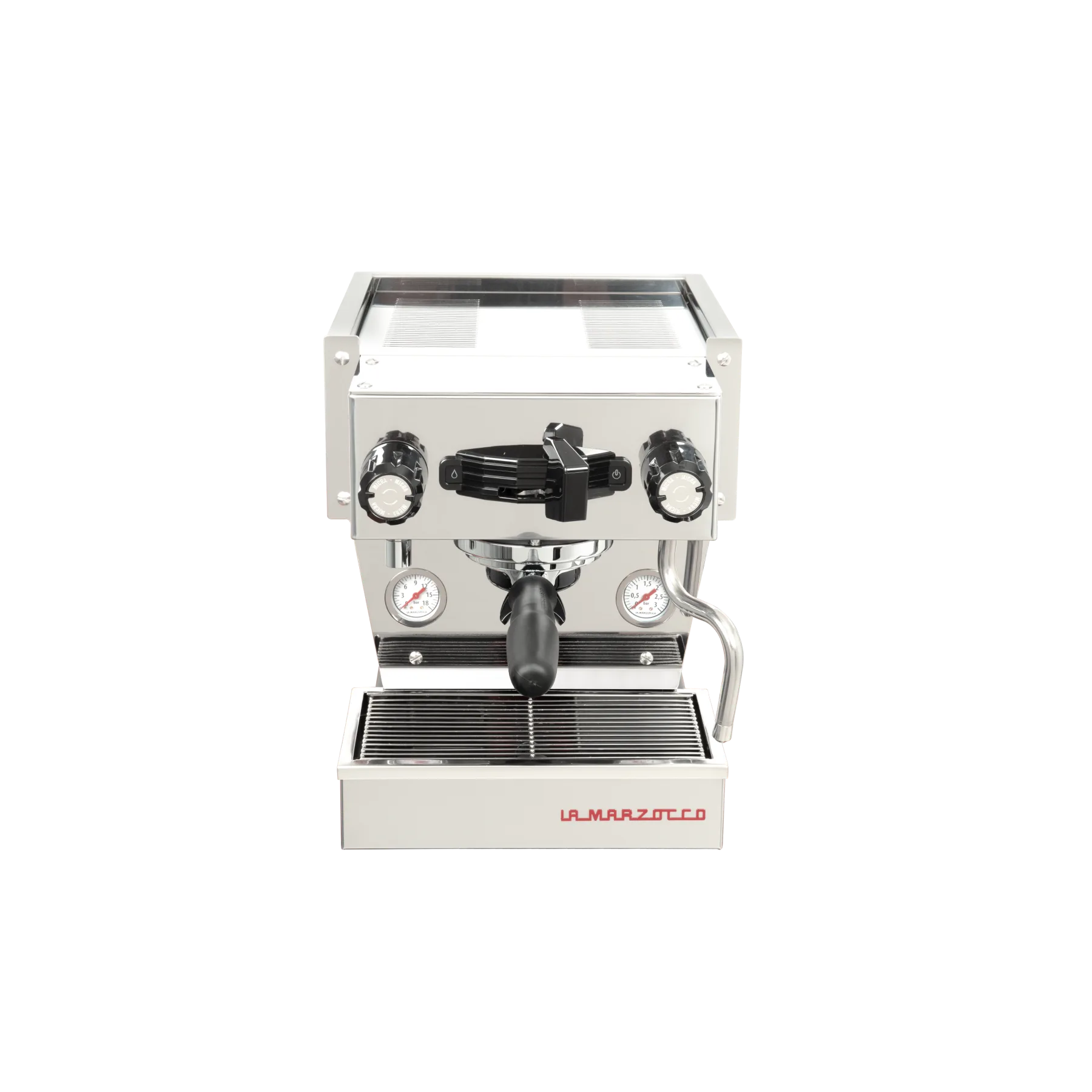
The La Marzocco Linea Micra distills 70 years of Italian café engineering into a countertop box. The core is a "Saturated Group," a 0.25L brew boiler welded directly to the group head. This gives the best intra-shot stability of any boiler machine because thermal recovery is instant.

The app-controlled interface is a hedge. You need the app for major adjustments, which introduces long-term software risk. But the mechanical build is flawless. The proprietary portafilter uses polymer attachments that heat faster than brass, so the first shot is as stable as the tenth. A 2-year-old Micra commands 78% of its original price on the used market. The category average is 64%.

The Micra's 5-minute warm-up prioritizes the brew boiler over steam. First shot in 5 minutes; full steam pressure takes another 3-4 minutes. The "Auto Back Flush" mode simplifies maintenance. Heritage, resale value, commercial-grade stability in a compact footprint. The Micra wins on all three.

Heavyweight Champion

ECM Synchronika II

  • Active Group Heating (6.5 min)
  • 2.0L Massive Steam Boiler
  • Quiet Rotary Vane Pump
  • Optional Flow Profiling
Approx $3,400

German over-engineering at its peak. The ECM Synchronika II keeps the E61 aesthetic but fixes the biggest flaw: 45-minute warm-up. Electrical heating cartridges embedded in the brass group cut readiness to 6.5 minutes.

Inside: copper and stainless steel pipes routed with obsessive precision. A commercial rotary vane pump, silent with instant 9-bar pressure, direct-plumbable to a water line. For the purist who wants the tactile ritual of an E61 lever but refuses to wait 45 minutes, this is the machine.

The Synchronika II's massive 2.0L steam boiler is the largest in the prosumer category, providing sustained steam pressure for back-to-back cappuccinos without any recovery lag. The optional flow control paddle allows for manual pressure profiling, giving you the ability to replicate lever-machine extraction curves on a pump-driven system. It is the ultimate "forever machine" for those who want German durability with modern thermal agility.

Best Compact Dual Boiler

Profitec Move

  • Ring Brew Group Technology
  • Fast 7-10 Min Heat-up
  • American Walnut Accents
  • Narrow 27cm Footprint
Approx $2,400

The Profitec Move is the "Goldilocks" machine for small urban kitchens. It utilizes a "Ring Brew Group" where the 0.4L brass boiler is mounted directly on top of the group head for rapid thermal conduction. It departs from the "box of steel" utilitarian look of its predecessors by featuring American Walnut handles and accents as standard.

A welcome addition is the integrated barista lights under the group, essential for diagnosing channeling on bottomless portafilters. It offers the stability and steam performance of a true dual boiler in a footprint that won't dominate your counter space.

The Move's narrow 27cm footprint makes it the most compact true dual-boiler on the market. The steam wand punches above its weight class, delivering dry, powerful steam comparable to machines twice its size. Heat-up takes 7-10 minutes through intelligent sequential logic. Small kitchen? Refuse to compromise? This is the one.

Value Powerhouse

Lelit Mara X (V3)

  • Double Probe PID HX Logic
  • Silent-Mount Vibration Pump
  • Narrow 22.5cm E61 Chassis
  • No Cooling Flush Required
Approx $1,700

The Lelit Mara X (V3) has completely reinvented the Heat Exchanger (HX) platform. By placing a second PID probe inside the HX tube, it manages brew temperature with near-dual-boiler precision, essentially eliminating the need for the "cooling flush" common to old HX designs.

Its "Silent Pump" technology uses a patent-pending mount that isolates the vibration pump from the chassis, making it nearly as quiet as a rotary pump unit. It is the smallest E61 machine on the market and offers unbeatable value for those who want classic aesthetics with modern thermal logic.

The Mara X's narrow 22.5cm E61 chassis is a feat of engineering. Full-size E61 group in a footprint smaller than most single-boilers. The V3 adds a shot timer and improved steam tip as standard. Best value in the prosumer category. Not close.

Industrial Icon

Rancilio Silvia Pro X

  • Commercial Brass Brew Boiler
  • Variable Soft Infusion (0-6s)
  • COTS Component Reliability
  • Industrial Boxy Durability
Approx $1,800

The Rancilio Silvia Pro X is the "Volvo" of espresso gear, safe, reliable, and built to survive for decades. Its defining feature is Variable Soft Infusion, which opens the brew valve without full pump engagement to wet the puck for up to 6 seconds. This reduces channeling and improves the extraction of delicate light roasts.

Rancilio uses Commercial-Off-The-Shelf (COTS) parts shared with their café gear, ensuring that replacement gaskets, solenoids, or elements will be available globally for 20+ years. The dual-boiler configuration provides independent temperature control for brewing and steaming, with a commercial-grade brass brew boiler that holds ±0.5°C through a 30-second pull.

In daily use, the Silvia Pro X excels at consistency. The boxy industrial design won't win beauty contests. The internal build quality will outlast everything else in this price tier. No apps. No flow profiling. Just a machine that works, every day, for decades. The pragmatist's choice.

Modern Choice

Ascaso Steel Duo PID V2 Plus

  • Dual Thermocoil Technology
  • Fresh Water Shot Delivery
  • Wooden Joystick Steam Lever
  • Eco-Efficient Instant-On
Approx $2,100

Energy-efficient and immediate. The Ascaso Steel Duo PID V2 Plus uses "Thermocoils," which are stainless steel pipes inside aluminum blocks. Unlike boiler machines, it draws fresh water for every shot, which improves taste clarity. It is ready to brew in under 5 minutes and consumes 30% less energy than a traditional dual boiler.

The 2026 'Plus' model upgrades the interface with a wooden joystick lever for immediate steam power and ships standard with a high-quality bottomless portafilter. The thermocoil technology means you never have stale water sitting in a boiler overnight—noticeable when brewing delicate single-origin coffees. Steam is dry and fast, comparable to machines at twice the price. The dedicated steam thermocoil delivers without the recovery lag typical of single-boiler machines.

The Steel Duo breaks from traditional espresso engineering. No brass boiler. No stale reservoir water. Just fresh water, heated on demand, with thermal stability that now matches traditional designs. If you refuse to keep a 2-liter boiler at temperature 24/7 for a single morning shot, this is your machine.

Aesthetic Icon

Rocket Appartamento TCA

  • Boiler Pressure Pressure Logic
  • Signature Circular Cutouts
  • New Curved Modern Rear
  • Tactile Mechanical Ritual
Approx $1,950

The Rocket Appartamento TCA (Temperature Control Adjustment) is the redesign of an Instagram legend. It adds modern logic to the classic aesthetic with a sensing wire that monitors boiler pressure adjustments. The user toggles between 4 preset pressure settings, which indirectly manages brew temperature.

The vibration pump runs quieter than its predecessor. Rocket reorganized the internal layout to dampen resonance. The V2 chassis is deeper, more fluid, a genuine centerpiece. Those signature circular cutouts and mirror-polished steel make it the most photogenic machine in the category. The E61 lever pull remains unchanged: mechanical, tactile, satisfying.

The Lelit Mara X offers better HX temperature control at a lower price. The Rocket charges a premium for Italian design heritage and build quality you can feel the moment you touch it. You're paying for how it looks on your counter and how the lever feels in your hand. If that matters, the premium is worth it. If it doesn't, buy the Mara X.

Smart Choice

Breville Oracle Jet

  • ThermoJet 3-Second Start-up
  • Auto MilQ (Alternative Milk Profiles)
  • Integrated Burr Grinder
  • Touchscreen Interface
Approx $2,800

The Breville Oracle Jet is the "automation bridge." ThermoJet technology: ready to brew in 3 seconds. Automated grinding, tamping, and milk texturing, but with standard 58mm stainless hardware underneath. The 2026 software includes profiles for Oat, Almond, and Soy milk to prevent curdling.

The integrated conical burr grinder eliminates the need for a separate grinder, and the automatic tamping system applies consistent 30-pound pressure every time. The Auto MilQ system uses temperature sensors to automatically texture milk to the perfect microfoam consistency, with dedicated profiles that adjust steam pressure and duration for alternative milks. It also features a unique "Cold Espresso" mode for rapid cold-brew-style shots.

The Oracle Jet is the ultimate dinner party machine, allowing a novice to pull flat whites that rival high-end shops with zero training. Serious enthusiasts will hit the ceiling fast. You can't adjust grind mid-workflow or experiment with tamping pressure. Best suited for households where multiple users of varying skill levels need consistent results, or the busy professional who wants café-quality drinks without the learning curve. At this price, you're paying for convenience over control.

Entry Champion

Profitec Go

  • External OPV adjustment screw
  • Fast 5-7 Min Heat-up
  • Large 0.4L Brass Boiler
  • Industrial Build Under $1k
Approx $995

The Profitec Go is the definitive entry point to prosumer espresso. It is a single-boiler unit that keeps the high-performance core: PID control, brass boiler stability, and an external OPV screw that allows the user to adjust pump pressure from 9 to 6 bar without removing the chassis. This external OPV adjustment is typically only found on machines costing twice as much, and it allows users to dial in pressure for different coffee styles without voiding the warranty.

The 0.4L brass brew boiler is larger than many dual-boiler machines' brew boilers, holding temperature steady through back-to-back shots. Heat-up takes 5-7 minutes through intelligent PID logic. The single-boiler design means you wait 30-45 seconds when switching between brewing and steaming. For 1-2 drinks at a time, that's a minor trade-off for the cost savings.

The Go pulls shots identical to machines costing three times as much. The catch: patience with steam. Wait 30-45 seconds between brew and steam modes. Our standard recommendation for a first machine. Learn the craft on proper hardware, upgrade later if you need the workflow speed. Most people never do.

Understanding Pump Types and Group Head Design

Choosing a machine in 2026 requires understanding the structural differences between Cafe gear and Home gear. The lines have blurred, but the engineering tradeoffs remain.

The Pump Choice: Rotary vs. Vibration vs. DC Gear

The pump is the heart of the machine. Most spec sheets bury it. Rotary vane pumps (found in the Synchronika and Micra) are heavy, expensive, and silent. They deliver 9 bars of pressure the millisecond you engage the lever and allow for direct plumbing to a water line. Vibration pumps (found in the Silvia, Mara X, and Go) build pressure gradually—a form of "poor man's pre-infusion"—but they're louder and rely on internal water tanks.

The third category: DC gear pumps. Found exclusively in the Decent Bengle, these computer-controlled motors speed up or slow down to create specific pressure curves with millisecond precision. True "flow profiling." Mimic a lever machine's pressure ramp, a commercial pump's flat profile, or invent entirely new extraction curves. The trade-off: complexity. If the controller fails, you can't swap in an off-the-shelf replacement.

Saturated vs. E61 Group Heads

The E61 group is a 60-year-old icon. It relies on a thermosyphon to stay hot. The tactile joy of pulling a mechanical lever is unmatched, but the energy waste is high. The Saturated group (Linea Micra) welds the boiler to the group, resulting in better temperature precision for back-to-back shots. In 2026, the choice usually comes down to whether you value the "Ritual" of E61 or the "Precision" of Saturated designs.

The IoT Dependent Future

Modern flagships are moving controls into smartphone apps and tablet screens. Decent and Breville now ship "software updates" to your espresso machine. The upside: new features after purchase. The risk: lifespan dependency. A mechanical E61 will still work in 40 years. Will the app for your 2026 machine still be on the App Store in 2046? Want a "forever machine"? Stick to the industrial analog builds from Rancilio or ECM.

The Repairability Spectrum: COTS vs. Proprietary

An espresso machine is a 20-year purchase. Something will break. The question: can you fix it? The industry splits: machines built with Commercial-Off-The-Shelf (COTS) parts vs. proprietary electronics. The Rancilio Silvia Pro X and ECM Synchronika II use COTS: solenoid valves, heating elements, gaskets identical to café gear. In 15 years, any technician can order replacements from a restaurant supply house. The Lelit Mara X and Profitec Move sit in the middle: tightly packed interiors, but standard core components.

At the opposite end: Breville Oracle Jet and Decent Bengle. These machines depend on proprietary mainboards, custom sensors, firmware-controlled heating. If the control board fails after warranty, you need the manufacturer to still exist and still care. Decent has open-sourced their designs. Breville hasn't. A 2026 Oracle may be unrepairable by 2036 if spare boards get discontinued. If you want a machine that outlives you, weight repairability as heavily as thermal stability.

Pairing with a Prosumer Grinder

A prosumer espresso machine deserves a dedicated espresso grinder. The particle uniformity from a $3,000 grinder will improve your shots more than upgrading from a $2,000 to a $4,000 machine. If you're investing in this tier of equipment, your grinder should match. See our Prosumer Coffee Grinders guide for the 2026 picks, including the Lagom 01, Kafatek Flat MAX, and Weber EG-1.

verified
The Final Verdict

Our Recommendation

After 80+ hours of testing, the Micra wins. It balances commercial heritage with countertop size, delivers saturated-group thermal stability, and avoids the complexity of software-defined extraction. This machine will pull perfect shots for 30 years if you maintain it.

La Marzocco Linea Micra

star star star star star (Editor's Choice)
  • Saturated Group Stability
  • 5-Minute Start-up
  • Commercial Steam Power
Check Best Price

Frequently Asked Questions

Thermal Mass vs Thermal Agility: Which is better?

add

Thermal Mass (like the Synchronika II) relies on heavy brass to dampen fluctuations and offers a classic mechanical ritual. Thermal Agility (like the Decent Bengle) uses mixing chambers for real-time temp precision. Choose Mass for longevity and ritual, Agility for data-driven light-roast experimentation.

Is the IoT dependency on modern machines a risk?

add

Yes, machines like the Micra and Bengle rely on software or apps for core settings. While they offer unprecedented control, they lack the 'analog' simplicity of a traditional E61. For a machine designed to last 20 years, consider the serviceability of a Silvia Pro X which uses modular industrial parts.

Why do Rotary Pumps cost more than Vibration pumps?

add

Rotary pumps are significantly quieter, allow for direct plumbing to a water line, and deliver constant pressure instantly. Vibration pumps are more compact and build pressure more slowly (providing a natural pre-infusion), but they are louder and rely on a reservoir.

What are the different types of pre-infusion?

add

There are three main types: Mechanical pre-infusion (E61 spring-loaded chambers that passively soak the puck), Electronic pre-infusion (pump pulsing or reduced voltage to build pressure slowly), and Flow-controlled pre-infusion (needle valves or motor speed adjustment for precise saturation). The Silvia Pro X uses a timed passive soak, while the Decent Bengle can simulate any pre-infusion style via software.

Are thermoblocks now good enough for serious espresso?

add

Yes, in 2026 thermoblock technology has matured significantly. The Ascaso Steel Duo's dual-thermocoil system rivals traditional boilers in thermal stability while offering fresh water for every shot and drastically lower energy consumption. The trade-off is steam power. While continuous, it lacks the instant 'punch' of a large steam boiler. For milk-forward drinks, a boiler machine still has an edge.